


How Digital Menu and QR Ordering Systems Are Transforming UAE
Walk into almost any new café opening this year and the first thing you’ll notice probably isn’t the smell of coffee. It’s the screen by the counter, cycling through today’s specials in crisp motion graphics, or the small table tent asking you to scan before you order. A few years ago, this felt like a novelty reserved for flashy chains. Now it’s closer to the default.
For restaurant owners, though, the real story isn’t about how these tools look. It’s about what they change behind the scenes — how orders move from a guest’s phone to the kitchen, how a price update happens in seconds instead of a reprint job, how a single QR code can quietly reduce the number of things that go wrong during a Friday night rush. That’s the piece worth understanding properly, because getting it right, or wrong, shapes how a restaurant actually runs, not just how it looks to a first-time visitor.
This guide breaks down digital menu and QR ordering systems from an operational lens: what they are, what they genuinely fix, what they cost, and how to choose an approach that fits your concept rather than someone else’s.
Why Digital Menu and QR Ordering Matter for Restaurants Today?
The shift didn’t happen overnight, and it didn’t happen because restaurants suddenly fell in love with technology for its own sake. Diners changed first. Contactless ordering started as a health precaution, but it stuck around because it turned out to be genuinely more convenient — no waiting for a menu, no chasing a server to ask about the second glass of wine, no confusion over what’s actually in stock tonight.
That shift in expectation now collides with a market that’s more crowded than it’s ever been. New restaurants open every month, and standing out takes more than a good dish — it takes an experience that feels current from the first five minutes. Anyone researching how to market a new restaurant in Dubai quickly runs into the same theme: first impressions are formed before the food ever arrives, and a clunky, dated ordering process undercuts even excellent cooking.
None of this means every restaurant needs a wall of screens or a fully app-based ordering flow. But it does mean the conversation has moved past whether to consider this, and on to which version of it actually fits.
What Are Digital Menu Boards? Understanding the Basics
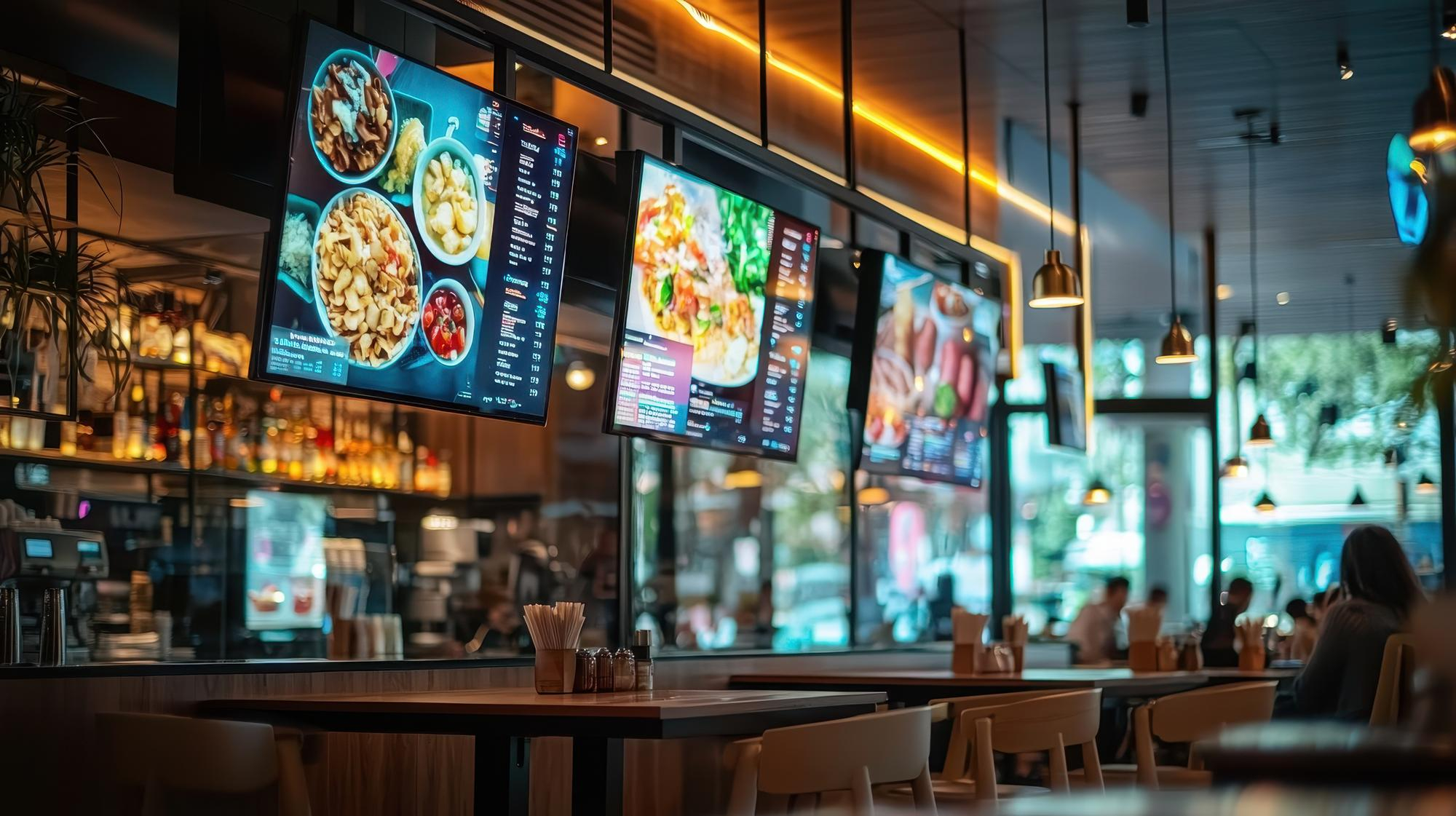
At their core, digital menu boards are simply screens — usually LED or LCD — connected to a content management system that lets a restaurant update what’s displayed without touching a single physical sign. A manager logs into a dashboard, changes a price or swaps out a seasonal item, and the update appears on every connected screen almost immediately.
How the Technology Actually Works?
The setup varies by budget and ambition. Some restaurants run a single screen near the till showing a rotating menu. Others connect dozens of displays across multiple branches, all managed from one central dashboard, with different menus showing at different times of day — breakfast until eleven, then a seamless switch to lunch. The screens themselves aren’t the clever part; the software behind them is, since it’s what turns a static picture into something that responds to stock levels, time of day, or even a slow afternoon that could use a promotional nudge.
Where Restaurants Are Using Them Most?
In practice, digital menu boards tend to cluster around a handful of high-traffic moments:
- Entrance and waiting-area displays that showcase specials before a guest even sits down.
- Drive-thru boards, where speed and legibility matter more than almost anywhere else.
- Food court screens, competing for attention among a dozen other outlets.
- Multi-brand or daypart menus, useful for cloud kitchens running several concepts from one location.
Each of these solves a slightly different problem, which is worth keeping in mind before assuming one screen type fits every use case.
How Does QR Code Ordering Work, Exactly?
If digital menu boards are about presentation, QR ordering is about the actual transaction — how a guest moves from curiosity to a placed order without a server acting as the middleman for every step.
The Guest Journey — From Scan to Served
The mechanics are almost embarrassingly simple, which is part of why adoption spread so fast. A guest points their phone camera at a code, a browser opens — no app download, no account creation in most cases — and they’re looking at the full menu, often with photos, descriptions, and allergen notes that a rushed server might skip entirely. From there, they build an order and submit it, and in a well-built system, that order lands directly on a kitchen display or a POS terminal, skipping the notepad-and-memory relay that’s caused more mistakes than most restaurants care to admit.
Table Ordering, Counter Ordering, and WhatsApp-Based Models
Not every QR ordering setup works the same way, and the differences matter more than they first appear.
- Table-side ordering ties each code to a specific table, so orders route automatically with the correct location attached — useful for full-service dining where a guest might order across several rounds.
- Counter or pickup ordering is built for speed rather than a lingering meal, common in cafés and quick-service spots.
- WhatsApp-based ordering skips a dedicated app or website login entirely, sending the order straight into a chat thread the restaurant already monitors. Platforms built around this model, like Meno, have leaned into this specifically because it avoids the cost and complexity of full POS integration — a guest scans, browses, and the order lands in WhatsApp, with payment collected however the restaurant prefers.
Dynamic QR code platforms generally allow a restaurant to update where a code points without printing a new one — a small detail that saves a surprising amount of hassle once a menu changes for the third time in a month.
The Operational Benefits: How These Tools Streamline Restaurant Workflows?
This is where the conversation usually gets interesting for owners, because the guest-facing side is really just the visible layer. Underneath it, several operational problems that restaurants have lived with for years start to loosen.
Faster Table Turnover, Fewer Bottlenecks
When a guest can order the moment they sit down, without waiting for a server to notice them, the entire dining cycle compresses. Servers aren’t pulled away from other tables just to take an order; they’re freed up for the parts of the job that actually need a human — checking in, recommending a dish, handling a problem. For quick-service and casual dining formats especially, shaving even a few minutes off each cycle adds up meaningfully across a busy evening.
Order Accuracy and Kitchen Communication
Anyone who has run a restaurant floor knows how many small errors creep in through verbal relay — a missed “no onions,” a size mixed up, a modifier that never made it to the kitchen ticket. QR ordering routes the guest’s exact input straight to the kitchen display, removing a step where miscommunication tends to live.
Restaurants that shift a meaningful share of orders to self-service channels often report a noticeable drop in comped meals and remakes — not because staff got better, but because there’s simply one less human relay in the chain.
Real-Time Menu Updates Without Reprint Costs
Then there’s the cost that rarely gets discussed until it’s already a problem: reprinting. Seasonal changes, price adjustments, an ingredient that suddenly isn’t available — all of it used to mean a trip to the printer and a stack of menus that were outdated within weeks. A digital system collapses that into a few clicks, and the update is live everywhere at once, whether that’s three screens or three hundred QR-linked menus across multiple branches.
The Guest Experience: Why Diners and Visitors Are Embracing Digital Menus?
Operations aside, there’s a genuinely human reason this technology has taken off here, and it has less to do with convenience than with who’s actually eating.
Serving a Multilingual, Multicultural Market
Few dining markets pack in as many nationalities, languages, and dietary expectations under one roof on a given night. A printed menu, however well designed, can only accommodate so much before it becomes cluttered or simply excludes guests who don’t read the primary language fluently. Digital menus solve this quietly — a tap switches the language, and a menu that once required guesswork becomes something every guest can navigate on their own terms.
A City Full of Food Explorers
There’s also the discovery side of dining, which matters more here than in most places. People are constantly hunting for the next spot worth trying, whether that’s a list of hidden gem restaurants in Dubai passed around a group chat, a roundup of the best restaurants in Abu Dhabi saved for a weekend plan, or a guide to the must-visit seafood restaurants in Dubai pulled up the moment someone mentions craving fish. When a guest arrives at a restaurant they found through exactly that kind of recommendation, a menu that’s easy to browse, photographed well, and quick to act on does a lot of the remaining persuasion work on its own. It’s the difference between a guest reading about a dish and a guest actually ordering it within thirty seconds of sitting down.
Weighing the Cost: Is the Investment Worth It?
None of this is free, and it would be dishonest to pretend otherwise. The two technologies also sit at very different points on the cost spectrum, which matters when deciding where to start.
Digital Menu Boards — Upfront Cost vs Long-Term Value
Screens, mounting, cabling, and the software subscription behind them represent a real upfront investment — and proper installation isn’t optional. Cutting corners on mounting or electrical work tends to cost more later than it saves now. That said, the payback tends to show up gradually: no more reprinting bills, fewer wasted printed menus when an item runs out, and a presentation that keeps pace with promotions without extra design costs every time something changes.
QR Ordering — Low Barrier, Fast Payoff
QR ordering, by contrast, is often the cheaper and faster of the two to adopt. Many platforms charge a modest monthly fee per location rather than requiring hardware at all — a printed table tent with a code is sometimes the only physical component needed. For a restaurant testing the waters before committing to a full digital menu board rollout, this is usually the more sensible starting point: lower risk, faster to measure, and easier to reverse if it doesn’t suit the concept.
A reasonable way to frame it: menu boards are closer to a renovation decision, while QR ordering is closer to a subscription decision. Both deserve real thought, but they don’t demand the same level of commitment before you can tell whether they’re working.
Choosing the Right Setup for Your Restaurant Concept
There’s no single “right” setup, and most of the friction owners run into comes from adopting a system built for a different kind of restaurant than the one they’re running.
Matching Technology to QSRs, Cafés, Fine Dining, and Cloud Kitchens
A quick-service concept generally wants speed above everything: a drive-thru board, a counter QR code, minimal friction between decision and payment. A café often does well with a simpler setup — one table-side QR menu, updated seasonally, without the overhead of full digital signage. Fine dining tends to move more cautiously here, since an overly tech-forward ordering flow can clash with the experience a guest is actually paying for; a subtler QR menu alongside a physical one often works better than replacing service entirely.
Cloud kitchens are a category of their own. With no dining room and no physical menu to hand over, QR code menu solutions built specifically for cloud kitchens tend to focus less on table ordering and more on connecting delivery packaging, marketing material, and the online order flow into one coherent system, since every single customer touchpoint is, by definition, digital.
It’s also worth noting that this shift isn’t confined to restaurants. Hotels have been running a near-identical playbook for their own guests, and the parallels around QR code technology and guest experience in UAE hotels are worth a look if your restaurant sits inside a hospitality property or shares guests with one.
Questions to Ask a Provider Before You Commit
Before signing anything, a short list of questions tends to save real headaches later:
- How quickly can menu items and prices actually be updated, and by whom?
- Does the platform offer real usage analytics, or just a scan counter?
- Can it scale across multiple branches from a single dashboard?
- What does local installation and ongoing support actually look like?
- Is pricing per location, per scan, or a flat commission on orders?
That last question in particular tends to matter more than owners expect once volume picks up.
Branding and Design: Making the Technology Feel Like Your Restaurant
It’s easy to treat a digital menu as pure infrastructure and forget it’s also, still, a piece of your brand — often the first piece a new guest actually interacts with.
A generic template with stock fonts and a mismatched color palette undercuts a restaurant’s identity in a way a beautifully designed physical space never would. The same care that goes into restaurant logo design and building a coherent brand experience needs to carry through to the screen a guest scans or the menu they browse on their phone — same colors, same tone, same visual language. Guests notice inconsistency even when they can’t quite name what feels off.
This is also where photography earns its keep. A dish that looks appetizing on screen converts noticeably better than a plain text listing, which is part of why dedicated restaurant menu design services increasingly build QR and digital menu layouts alongside the traditional print version, rather than treating them as separate projects. Getting a design team involved early — rather than bolting a digital menu onto whatever assets already exist — tends to produce something that looks intentional instead of improvised.
Turning Your Digital Menu Into a Marketing Channel
A digital menu doesn’t have to stop at taking orders. Treated well, it becomes a genuinely useful marketing asset — one most restaurants underuse.
WhatsApp Ordering as a Direct Line to Customers
Because WhatsApp is already how most people in the region communicate day to day, ordering through it doesn’t feel like a new habit to learn — it feels like an extension of a conversation a guest is already comfortable having. That familiarity is exactly why WhatsApp marketing for food businesses has become such a reliable channel for repeat engagement: once a guest has messaged a restaurant once, following up with a promotion, a reorder prompt, or a loyalty nudge feels natural rather than intrusive, in a way a cold email rarely does.
QR Codes Beyond the Table
The table isn’t the only place a QR code earns its keep. Printed on a receipt, it can link to a feedback form or a loyalty sign-up. On a delivery bag, it can drive a customer straight to a reorder page. On social media, it can connect a post directly to the day’s specials. Restaurants exploring creative QR code marketing for customer engagement are increasingly finding that the code itself is just a delivery mechanism — the real value sits in whatever thoughtful destination it points to.
For restaurants without an in-house marketing team, this is often the point where bringing in a digital marketing agency makes sense — not to build the technology itself, but to actually plan and execute the campaigns that make a QR code worth scanning more than once.
Common Challenges and How to Solve Them?
None of this is without friction, and pretending otherwise does owners a disservice.
Guests Who Prefer the Old Way
Not every guest wants to interact with a screen before ordering, particularly older diners or those simply out to relax without fumbling with their phone. The fix isn’t complicated: keep a small stock of printed menus available on request, and make sure staff are ready to take a verbal order without friction. Digital shouldn’t mean mandatory.
Connectivity, Downtime, and Staff Training
A QR menu is only as reliable as the connection behind it, and a dead Wi-Fi signal at the worst possible moment — a packed Thursday night — can undo a lot of goodwill fast. A few practical safeguards go a long way:
- Keep a backup connection or an offline fallback menu ready.
- Train staff to troubleshoot basic issues without pulling in outside support.
- Run a proper onboarding session before launch rather than assuming the system explains itself.
That last point gets skipped more often than it should. Even the best-designed system creates confusion if the team running the floor doesn’t fully understand how orders actually reach the kitchen.
What This Means for New Restaurants and Cafés Entering the Market?
For an establishment just getting off the ground, there’s an argument for skipping the old way entirely rather than adopting it and later replacing it.
New businesses in the UAE face a genuinely competitive opening month, and building a digital-first ordering flow from day one avoids the sunk cost of printing a full menu run that will likely need revising within weeks anyway, as pricing gets refined and dishes get adjusted based on early feedback. It also means the visual assets — the photography, the layout, the branding — only need to be built once, for one format, rather than duplicated across print and digital later.
That makes early investment in product photography worth prioritizing rather than treating as an afterthought, since a digital menu leans on visuals far more heavily than a printed one ever did. Partnering with professional food photography services from the outset tends to pay for itself quickly once the menu is actually driving orders, rather than sitting there as an untested, hastily-shot placeholder.
Where This Is Heading? The Next Phase of Restaurant Ordering Technology
It’s worth stepping back and looking at where this is actually headed, because the current setup — screens and QR codes — is likely an early stage rather than the end state.
Personalization is the obvious next step: menus that quietly reorder themselves based on a guest’s past orders, or that surface a dish more likely to appeal based on time of day. Loyalty integration is following closely behind, where scanning to order and earning points happen in the same motion instead of two separate systems that never quite talk to each other. There’s also a sustainability angle that shouldn’t be dismissed as a side benefit — less printed paper, less waste from outdated menus, all adding up over a year in ways that matter to increasingly conscious guests.
None of this erases the more basic challenges restaurants are still working through. Plenty of operators researching digital marketing challenges facing food businesses are discovering that the technology is rarely the hard part — adoption, training, and genuinely using the data these systems generate is where the real work sits. Broader industry coverage of digital QR solutions transforming the F&B industry points in a similar direction: the tools keep getting more capable, but the restaurants that benefit most are the ones treating them as an ongoing strategy rather than a one-time installation.
Digital menu and QR ordering systems aren’t really about looking modern for its own sake. Stripped down to what actually matters, they’re about removing friction — between a guest and their order, between a kitchen and accurate information, between a price change and the moment it reaches every screen or menu that needs it.
The restaurants getting the most out of this shift aren’t necessarily the ones with the flashiest screens. They’re the ones treating the technology as connected to everything else — branding, marketing, staff training, guest experience — rather than a standalone purchase made once and forgotten.
