


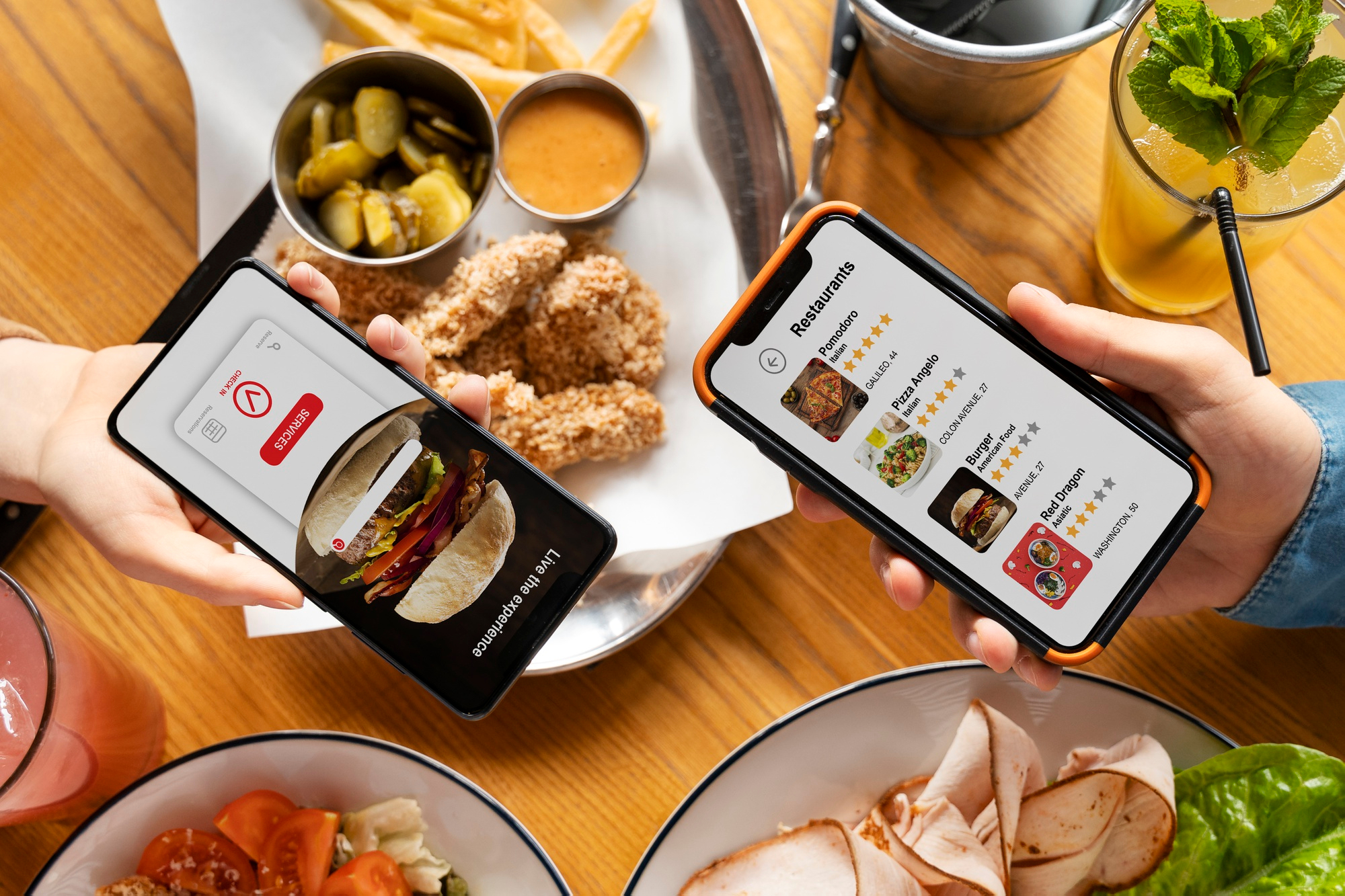
How Digital Menu Solutions for Restaurants in the UAE Are Cutting No-Shows and Order Errors?
Walk into a busy restaurant in Dubai or Abu Dhabi on a Friday evening and you’ll spot something most guests never notice: the gap between how many tables were booked and how many actually got filled. A party of six confirms for 8 PM, then simply doesn’t show up, and that table sits empty right through the dinner rush while walk-ins get turned away at the door. Somewhere in the kitchen, at almost the same moment, an order ticket reading “no onions” comes out with onions anyway, because a server misheard the request over the noise, or the handwriting on the pad wasn’t quite clear enough.
Neither problem makes headlines. Both quietly cost restaurants money, week after week, inside one of the fastest-growing F&B markets in the region. Restaurants across Dubai, Abu Dhabi, and Sharjah are opening at a pace that outpaces much of the wider Gulf.
That growth also feeds into the UAE’s rise as a global food destination, one that draws residents and millions of visitors year-round. Growth like that brings its own kind of pressure, though. More restaurants competing for the same tables means less patience for operational leaks the industry has long treated as just part of doing business. No-shows and order mistakes fall squarely into that category — and a properly implemented digital menu for restaurants UAE operators are increasingly adopting, paired with WhatsApp, is proving to be one of the most practical fixes available.
What a Digital Menu for Restaurants in the UAE Actually Solves?
The phrase “digital menu” gets used loosely these days, so it’s worth being precise about what it actually means in a restaurant setting right now. It isn’t simply a PDF of the old paper menu uploaded somewhere online — that’s a digital menu in name only, and it solves almost none of the problems restaurants actually have. A genuine digital menu system connects to how orders are taken, how the kitchen receives them, and often how the whole reservation and payment flow works. It’s less a document and more a small piece of restaurant infrastructure.
The Real Cost of No-Shows and Order Mistakes
Most restaurant owners can estimate their food cost percentage down to a decimal point, but ask about the cost of no-shows and order mistakes and the answer tends to get vague. That vagueness is exactly the problem — what doesn’t get measured rarely gets fixed. A few of the costs worth actually tallying:
- Empty tables during peak hours that could have gone to walk-ins or waitlisted guests.
- Food prepped or held for a reservation that never arrives.
- Comped meals or discounts issued to smooth over a wrong order.
- Staff time spent redoing a dish or apologizing to a frustrated table.
- The quieter cost: a guest who doesn’t come back, and never explains why.
None of these show up as a single line item on a P&L statement. Together, they add up to more than most owners assume.
Why UAE Diners Expect a Digital-First Experience?
There’s a reason digital menus caught on faster in the UAE than in many other markets. The population is genuinely diverse — residents and visitors from dozens of countries, most of them already comfortable scanning a QR code for parking, government services, or splitting a bill. That comfort transfers naturally to dining.
A lot of that same audience is also doing its restaurant research well before arriving at the table, discovering places through how UAE food businesses are showing up in social search rather than a phone book or a passing glance at a storefront. Add in a market where QR-driven digital solutions are already reshaping the wider F&B industry, and a printed, single-language paper menu starts to feel like it belongs to a different decade.
How No-Shows Quietly Drain Restaurant Revenue?
It’s easy to treat a no-show as an isolated inconvenience — annoying, but not worth building a whole system around. That thinking tends to change once an owner actually sits down and counts. A restaurant that loses even three or four reservations a week to no-shows, multiplied across a full year, is looking at dozens of missed table turns during exactly the hours it depends on most. In a market as competitive as the UAE’s, an empty table during peak hours isn’t a minor gap — it’s revenue that walked straight past the door and into a competitor’s dining room instead.
A table sitting empty for twenty minutes during peak hours has generated exactly zero revenue during the one window a restaurant can least afford to waste.
The Gap Between Booked and Seated Covers
Every restaurant that takes reservations is really tracking two different numbers: how many covers were booked, and how many were actually seated. The distance between those two numbers is where profitability quietly leaks out. A phone booking taken by a busy host during a lunch rush, scribbled onto a paper list or typed hastily into a spreadsheet, is inherently fragile — there’s no built-in reminder, no confirmation step, nothing that nudges the guest to actually show up or cancel in time for the table to be resold. The guest forgets, plans change, and the restaurant finds out only when the seat stays empty.
Why Traditional Reservation Systems Fall Short?
Plenty of UAE restaurants still run reservations the way they always have — a phone line, a host stand, a notebook or a basic spreadsheet. It works, up to a point. What it doesn’t do is close the loop with the guest between the moment they book and the moment they’re supposed to arrive. That gap is exactly where no-shows happen. Restaurants layering in revenue-protection tactics such as dynamic pricing strategies during peak periods are already thinking about this problem from the pricing side; closing the communication gap on the reservation side is the operational half of that same equation, and arguably the simpler one to fix first.
Where Order Errors Actually Happen and Why They’re Costly?
Order errors rarely come from a single dramatic mistake. They build up from a dozen small handoffs, any one of which can go slightly wrong — a server mishearing a request over restaurant noise, a kitchen ticket that’s smudged or abbreviated, a modification that gets mentioned but never written down. In a fast-paced service, none of that is anyone being careless. It’s simply what happens when the accuracy of an order depends on how clearly one person heard and transcribed what another person said.
Miscommunication Between Front-of-House and Kitchen
The classic order chain still runs through several people in a lot of restaurants: guest tells server, server tells kitchen, kitchen prepares based on a handwritten or verbally relayed ticket. Every step in that chain is a chance for something to get lost — a “no nuts” that doesn’t make it onto the ticket, a “medium rare” that becomes “medium,” a drink order that gets forgotten entirely during a rush. None of these mistakes are large individually. Collectively, across a full night of service, they add up to a meaningful share of complaints, comps, and frustrated guests.
Language Barriers in a Multilingual Market
The UAE’s restaurant floor is often as multinational as its dining room. A server who speaks Hindi as a first language might be taking an order from a French-speaking tourist, in English as the shared language, for a kitchen team that communicates primarily in Arabic or Tagalog. That’s not a flaw in the system — it’s simply the reality of hospitality staffing in the region. But it does mean verbal order-taking carries more room for small misunderstandings than it would in a more linguistically uniform market, which makes anything that reduces reliance on spoken communication worth taking seriously.
How Digital Menus Reduce Order Errors?
This is where a digital menu earns its keep. Once a guest is selecting dishes directly — tapping options, choosing modifications from a set list, confirming quantities on a screen — a huge share of the miscommunication described above simply stops happening. The order that reaches the kitchen is the order the guest actually typed, not a verbal relay that passed through two or three people first.
QR Code Menus and Real-Time Accuracy
A QR code menu does more than replace a laminated card. When it’s connected properly to the kitchen and point-of-sale system, an order placed by a guest lands on the kitchen screen exactly as entered — no handwriting to misread, no verbal relay to garble. The same underlying logic is what makes QR code ordering systems built for high-volume operations like cloud kitchens work at all, since there’s no dining room and every order depends entirely on digital accuracy from the first tap to the final handoff. If it holds up in an environment with zero room for human clarification, it holds up comfortably in a traditional restaurant too.
Multilingual, Multi-Currency Menu Options
A digital menu can offer the same dish in English, Arabic, Hindi, Russian, or half a dozen other languages, switched with a single tap — something a printed menu simply can’t do without becoming unreadably cluttered or requiring a separate print run per language. For a market where the average dining room might seat guests from six or seven different countries on a single evening, that flexibility isn’t a luxury feature. It directly reduces the chance a guest orders the wrong dish simply because they couldn’t fully understand what they were reading.
Visual Menus That Remove Guesswork
A well-photographed digital menu also removes a surprising amount of ambiguity. When a guest can see exactly what a dish looks like, along with clear allergen tags and portion notes, they’re far less likely to order something they didn’t actually want, or to be unpleasantly surprised by what arrives at the table. This is where thoughtful menu design earns its place alongside the technology itself — a beautifully built ordering system still underperforms if the menu content behind it is cluttered or unclear. A genuinely well-designed digital menu for restaurants UAE diners can navigate in seconds tends to reduce both order errors and the time guests spend deciding, which keeps table turnover healthier too.
WhatsApp as a Restaurant Operations Tool, Not Just a Chat App
It’s worth stating plainly: WhatsApp isn’t a marketing gimmick for restaurants in this market — it’s closer to essential infrastructure. Most UAE residents and visitors already have it open on their phone more often than any other single app, which makes it a natural channel for two-way, real-time communication that a phone call or email simply can’t match. Restaurants have already discovered its value on the marketing side — plenty use WhatsApp to generate leads and drive direct bookings — but its real operational potential shows up once it’s applied to reservations and order management too.
Reservation Confirmations Sent Automatically
Instead of a host relying on memory or a handwritten list, a booking made online or by phone can trigger an automatic WhatsApp confirmation the moment it’s entered into the system. The guest gets a message they can actually refer back to — date, time, party size — rather than a mental note that’s easy to forget by the time Friday evening rolls around. It’s a small step, but it closes one of the biggest gaps in traditional reservation handling almost immediately.
Reminder Messages That Cut No-Shows Before They Happen
The bigger win comes a few hours before the reservation, when a short reminder message goes out automatically — something as simple as confirming the table is still expected, with a one-tap option to cancel or reschedule if plans changed. Guests who genuinely can’t make it will usually say so, freeing the table up early enough to resell it. Guests who simply forgot get nudged back on track. Either outcome beats finding out at 8:15 PM that a table for six isn’t coming, with no time left to fill it.
Order Confirmations and Live Status Updates
The same channel works just as well after an order is placed, whether that’s a dine-in order sent from a table’s digital menu or a delivery and pickup order sent remotely. A WhatsApp confirmation showing exactly what was ordered gives the guest a chance to catch an error before it reaches the kitchen, not after the dish is already on the table. Status updates — order received, being prepared, ready for pickup — reduce the anxious “is it coming” messages that otherwise land on a busy front-of-house line.
Connecting Digital Menus and WhatsApp Into One Operations Flow
Used separately, a digital menu and a WhatsApp messaging system each solve part of the problem. Used together, as one connected flow, they solve considerably more than the sum of their parts. This is the piece a lot of restaurants miss when they adopt one tool but not the other — a beautifully designed QR menu still leaves the reservation side unmanaged, and a well-run WhatsApp reminder system still can’t prevent an order error once the guest is seated. The Next Grow has observed this pattern repeatedly across the operators it covers: the two tools are meant to work as a pair, not as separate, unrelated upgrades.
From Browsing to Booking to Ordering, Without Gaps
At its best, the flow looks like this: a guest discovers a restaurant, checks the digital menu to decide what they’re in the mood for, books a table, gets a WhatsApp confirmation and reminder as the date approaches, then orders directly from the same digital menu once seated — with the whole thing tracked in one system rather than three disconnected ones. Every handoff that used to depend on a person remembering, writing, or relaying something correctly is instead handled by a system that doesn’t forget and doesn’t mishear.
A Typical Guest Journey, Start to Finish
Picture a family of four in Abu Dhabi deciding on dinner. They find a restaurant through a recommendation, glance at the digital menu to check it has options for the kids, and book a table for 7:30 PM. A WhatsApp message confirms the booking within seconds. At 5:30, a short reminder arrives — table’s still on for 7:30, tap here if plans have changed. They arrive on time, scan the QR code at the table, and each person builds their own order on their phone, submitted directly to the kitchen. No one at that table ever has to repeat an order twice, and the restaurant never has to guess whether the booking was still happening.
Notice how much of this simply comes down to removing guesswork at every step, rather than adding anything particularly complicated.
What UAE Restaurants Gain Beyond Fixing No-Shows and Errors?
Reducing no-shows and order mistakes is reason enough to make the switch, but restaurants that adopt this combination tend to notice a handful of other benefits that weren’t the original goal — and are often just as valuable over time.
Customer Data and Repeat-Visit Insights
Every order placed through a digital menu, and every conversation handled through WhatsApp, generates data that a verbal order or a phone call never captured — what guests order most, when they typically book, which promotions actually get a response. That kind of information is exactly what feeds smart digital marketing tactics built around bringing repeat customers back, rather than constantly chasing new ones. A restaurant that knows its regulars’ habits can act on that knowledge instead of guessing at it.
Faster Staff Onboarding and Fewer Training Headaches
New staff, particularly during the UAE’s high seasons when hiring spikes fast, take considerably less time to get up to speed on a digital system than on memorizing menu items, modifiers, and every table’s quirks by heart. A digital menu effectively carries the institutional knowledge that used to live only in a senior server’s head. That matters in a market where staff turnover is a genuine operational reality, not an occasional inconvenience.
Stronger Customer Relationships Through Consistent Communication
Consistency builds trust, and WhatsApp-based communication makes that consistency easy to maintain without extra staff effort. A guest who gets a clear confirmation, a helpful reminder, and an accurate order every time is quietly building a positive association with a restaurant, even if they’d never articulate it that way. It’s the same underlying principle behind why UAE food businesses that use social media effectively for visibility tend to build stronger, longer-lasting customer relationships — the channel matters less than the consistency and clarity of what’s actually being communicated.
Getting Started: Practical Steps for UAE Restaurant Owners
None of this requires ripping out an entire operation overnight. Most restaurants that make this switch do it in stages, starting with whichever piece addresses their most pressing problem — order accuracy for some, no-shows for others. It’s also worth acknowledging upfront that adopting new digital tools rarely goes perfectly smoothly on the first attempt; the broader digital marketing challenges facing UAE food businesses, and practical ways around them, are worth understanding before committing budget to any single platform. Going in with realistic expectations makes the transition considerably less frustrating.
Choosing a Digital Menu Platform That Fits Your Restaurant
Not every digital menu platform is built for the same kind of restaurant, and the right choice depends heavily on the size and style of the operation. Platforms such as Meno are worth evaluating alongside others in the market, but the specific name matters less than checking for a few essentials:
- Multilingual support that covers the languages your actual guest base speaks.
- Real menu-editing flexibility, not a static image that needs a developer to update.
- Genuine integration with the kitchen and point-of-sale system, not a standalone app.
- Clear analytics on what’s actually being ordered.
A platform that ticks these boxes will do far more than simply look modern.
Setting Up WhatsApp Business the Right Way
WhatsApp Business is free to set up and doesn’t require a large technical team, but it does need to be configured properly to be useful for operations rather than just marketing. A few starting points:
- Set up automated confirmation and reminder templates for reservations.
- Create quick-reply options so guests can cancel or reschedule with one tap.
- Connect order confirmations to whatever POS or ordering system the restaurant already uses.
- Assign clear ownership — someone on the team should actually monitor and respond to messages during service hours.
Preparing Staff for the Transition
The technology only works if the team actually uses it well, which means staff need a proper walkthrough, not just a quick mention during a shift briefing. Most restaurants find that a short, hands-on training session — actually placing a test order, actually receiving a test WhatsApp reminder — does more good than any written manual. Staff who understand why the system exists, not just how to operate it, tend to troubleshoot small hiccups themselves instead of reverting to old habits the moment something feels unfamiliar.
Common Challenges Restaurants Should Plan For
No transition is entirely friction-free, and it’s worth being upfront about where restaurants commonly run into trouble.
Customers Who Prefer Traditional Menus
Some guests, particularly older customers or those less comfortable with smartphones, genuinely prefer a printed menu and a conversation with their server. The smartest approach isn’t to force everyone onto a screen — it’s to keep a small number of physical menus available on request, so the digital system serves the majority without alienating the minority. A restaurant that makes a guest feel awkward for wanting a paper menu has traded one problem for another.
Managing Costs for Small and Independent Restaurants
Digital menu and WhatsApp automation tools range widely in price, and a small independent café doesn’t need — or need to pay for — the same enterprise-level system a large hotel restaurant might. Most platforms now offer tiered pricing specifically for smaller operations, and the reservation-reminder piece alone, even implemented simply, tends to pay for itself quickly through recovered no-show revenue. Starting small and expanding once the basics are working is a perfectly reasonable approach, not a compromise.
The Bottom Line for UAE Restaurant Operators
No-shows and order errors will never disappear completely — that’s the nature of a business built around people, timing, and judgment calls. But most of what gets dismissed as “just how the industry works” turns out, on closer inspection, to be a communication gap that’s genuinely fixable. A digital menu closes that gap at the point of ordering. WhatsApp closes it at the point of booking. Together, they give a restaurant something close to a live conversation with every guest, rather than a string of assumptions that only get corrected once something’s already gone wrong.
Once that operational foundation is solid, the next opportunity for most restaurants is visibility — which is exactly why a business website still matters as much as it ever did, alongside the reservation and ordering systems layered on top of it. For restaurants ready to build on a steady operational base, specialists in advertising and digital marketing agencies are a natural next step toward keeping new demand flowing in, rather than simply protecting the demand that’s already there.
Frequently Asked Questions
Do digital menus work for small cafés, not just large restaurants?
Yes. Most digital menu platforms now offer simplified, lower-cost tiers built specifically for cafés and smaller F&B operations, without the enterprise features a hotel restaurant chain might need. The core benefits — accuracy, multilingual options, easier updates — apply at any scale.
Is WhatsApp Business free to use for restaurants?
The core WhatsApp Business app is free to download and use. Costs typically only apply once a restaurant scales up to automated messaging through the WhatsApp Business API, which larger operations often use for higher message volumes and deeper POS integration.
Do digital menus replace the need for staff?
No — they shift what staff spend their time on. Rather than repeatedly writing down orders or answering the same menu questions, staff can focus more on hospitality itself: checking in with guests, handling special requests, and managing the floor, which is ultimately what most guests remember about a dining experience.
