


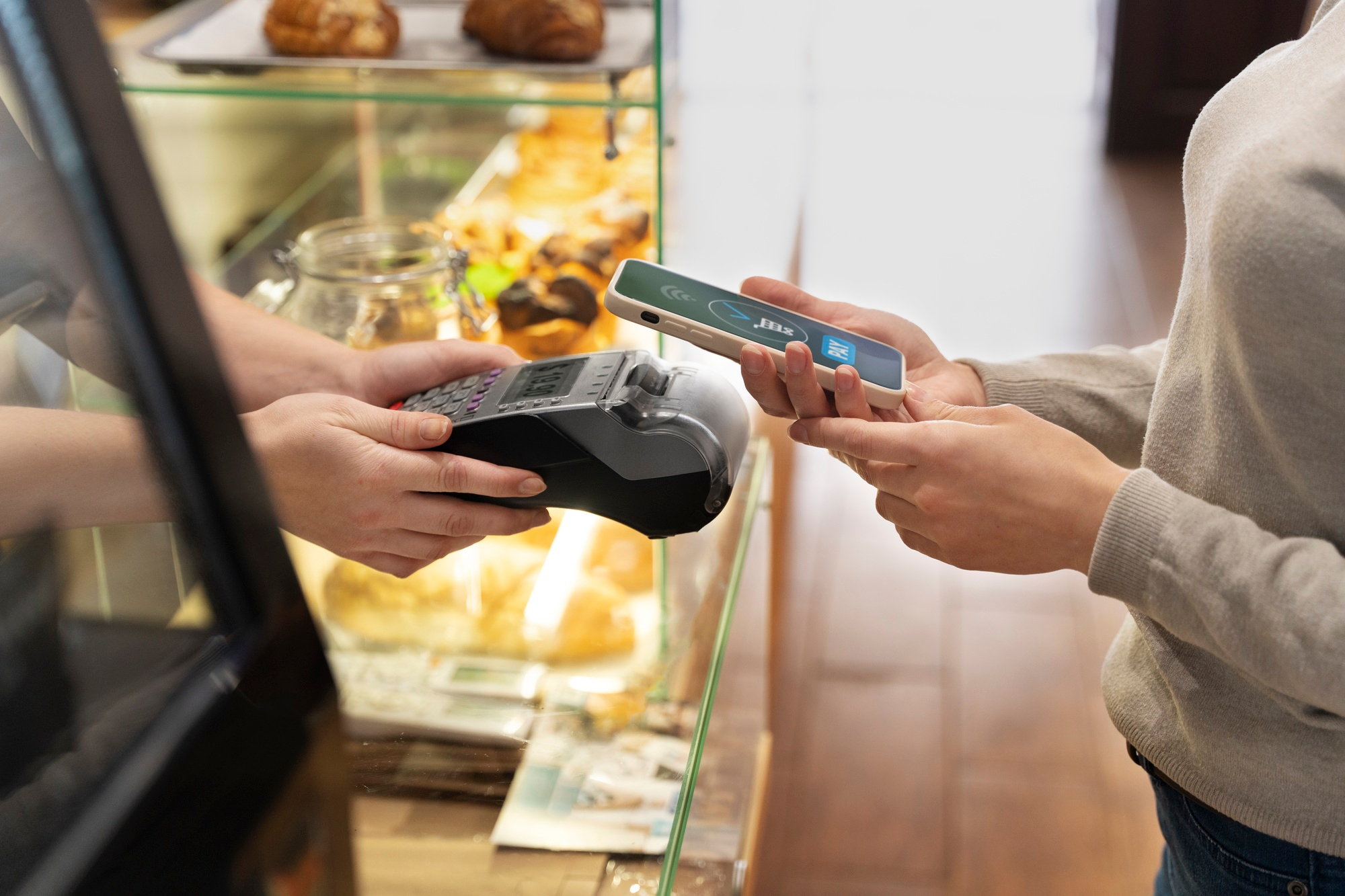
Contactless Payments in UAE Retail Are Now the Default
Walk into almost any coffee shop in Dubai Marina or a supermarket along Abu Dhabi’s Corniche today, and you’ll notice something. Almost nobody reaches for cash anymore. A tap of a phone, a flash of a card near the reader, sometimes a quick scan of a code on the counter — and the transaction is done before the receipt even finishes printing.
That shift didn’t happen by accident, and it didn’t happen overnight either, even though it can feel that way to anyone who still remembers queuing at a till with exact change in hand. Contactless payments UAE retailers have rolled out over the past few years now sit at the centre of a much bigger transformation, one that touches everything from how a customer browses a menu to how a small boutique keeps track of its regulars. Industry estimates suggest more than 90 percent of in-person transactions across Dubai and Abu Dhabi are expected to be contactless by 2026, and separate figures put proximity-based mobile payments at well over two-thirds of all mobile transaction volume in the country.
What’s less talked about is how much of this shift is being driven by QR codes rather than tap-to-pay cards and wallets alone. A QR checkout isn’t just a payment method. It’s often a doorway into a redesigned buying journey, one that starts the moment a customer sits down at a table or picks an item off a shelf, not just the moment they’re ready to pay. This piece looks at why the shift happened so quickly here, what it actually changes for the way people shop and dine, and what retailers weighing the switch should think through before committing to a system.
It’s also worth remembering this didn’t spring up out of nowhere. Cash gave way to cards over roughly two decades, cards gave way to chip-and-PIN, and chip-and-PIN gave way to tap. Each step shaved a few seconds off the checkout process and removed one more manual action. Contactless and QR-based checkout are simply the latest link in that same chain, arriving faster here than in most other markets because the underlying conditions were already in place.
A quick way to picture what “contactless” actually covers today:
- NFC tap-to-pay — a card or phone tapped directly against a reader.
- QR scan-to-pay — a customer scans a printed or on-screen code to pay through an app or wallet.
- Mobile wallet checkout — Apple Pay, Google Pay, and local wallets stored on a phone.
A grocery shopper tapping a card while balancing bags in one hand, a mall customer scanning a code to split a bill with friends, a hotel guest paying for breakfast without opening their wallet at all — the details differ, but the throughline is the same. Fewer hands touching fewer things, and fewer seconds spent standing at a counter waiting for someone else to finish a transaction.
Why Retailers Here Moved So Fast on This?
There’s rarely a single reason an entire market pivots this quickly, and this is no exception. A handful of factors converged at roughly the same time, and together they made contactless and QR-based checkout feel less like an optional upgrade and more like table stakes.
A Mobile-First Customer Base That Was Already There
This region didn’t need much convincing. Smartphone penetration sits above 90 percent, and mobile-first habits were baked into daily life long before checkout technology caught up. People were booking cabs, ordering groceries, and managing their banking from their phones years before QR menus showed up on restaurant tables. When a new payment method simply asks customers to do something they’re already comfortable doing, point a camera at a code, adoption doesn’t require much persuasion. The learning curve that slows adoption in other markets barely exists here, because the habit was already formed by a dozen other apps before checkout ever entered the picture.
A Government Push Toward a Cashless Economy
Dubai’s cashless strategy, launched in 2024, set a public target of 90 percent cashless transactions in the city by 2026, and that kind of policy signal tends to ripple outward. Banks and payment providers respond by shipping dual-interface terminals at no extra rental cost, acquirers subsidise the hardware side, and retailers who might otherwise have waited a few more years to upgrade find there’s very little reason to hold off. Card payments alone were projected to cross AED 565 billion in 2025, a jump of more than 10 percent from the year before, and that figure doesn’t even account for the wallet and QR volume sitting alongside it.
This isn’t just a marketing push, either. The Central Bank’s Financial Infrastructure Transformation Programme has been quietly rebuilding the plumbing behind these transactions, the settlement and clearing systems most customers never think about but that determine how quickly a retailer actually sees the money land in their account. A faster, more reliable backbone is part of why so many providers have been comfortable offering contactless hardware at little or no upfront cost. The risk on their end has gone down along with the friction on the customer’s end.
Habits That Started During the Pandemic and Simply Stayed
It’s worth remembering that a lot of this really did start as a hygiene measure. When health authorities discouraged physical contact at checkout, QR codes offered small businesses a way to keep operating without needing new hardware or a long-term contract. A printed code and a smartphone were enough to get started. What’s interesting is what happened after the immediate health concern faded. Businesses that removed their QR systems once things reopened found customers actually missed them. The convenience had outlived the original reason for adopting it, which is usually a good sign that a habit is here to stay rather than fading with the circumstances that created it.
Visitors Who Expect It, Whether They’re Local or Not
The customer base walking into a retailer here on any given day isn’t purely local, and that matters more than people sometimes assume. Between residents, a sizeable expat population, and a steady flow of tourists, checkout systems need to work for people arriving with very different banking habits and expectations. A tourist from a market where scan-to-pay is already the norm expects the same option here, and a returning visitor comparing this trip to their last one notices if the experience has gotten smoother. This extends well beyond the till, too. Restaurants offering direct Instagram bookings are solving a similar problem: removing friction at the exact moment a visitor decides to commit, whether that’s booking a table or scanning to pay for one.
How QR Checkout Is Reshaping the Buying Journey?, Not Just the Payment Step
This is probably the part that gets underappreciated. It’s tempting to think of a QR code at checkout as simply a cashless version of swiping a card, but that undersells what’s actually happening. The code isn’t just processing a payment. It’s often the single touchpoint connecting a customer’s entire visit, from the moment they sit down to the moment they leave with a receipt in their inbox instead of a slip of paper in their pocket.
From Menu to Payment in a Single Scan — What Restaurants Got Right First?
Food and beverage businesses adopted this pattern earliest, and for good reason. A single QR code on a table can open a digital menu, take an order, split a bill three or four ways without a server doing mental arithmetic, and process payment, all without anyone leaving their seat. Digital QR solutions in the region’s F&B industry now cover contactless dining, order accuracy, and even automatic receipt delivery, replacing what used to be four or five separate interactions with staff. Cafés and casual dining spots in particular have leaned into this because it directly affects table turnover. Fewer minutes spent flagging down a server means more covers per hour during a lunch rush.
It’s not only about speed, either. Restaurants that have committed to QR code–driven marketing for restaurants and cafés are finding that the same code customers scan to see a menu can also carry daily specials, allergen information, or a prompt to leave a quick review, turning a single scan into several small marketing moments strung together across one meal.
QR Codes as a Marketing and Loyalty Layer, Not Just a Terminal
Once a retailer treats the QR code as more than a payment rail, a lot of new possibilities open up. The same scan that processes a transaction can also enrol a customer in a loyalty program, apply a first-visit discount, or trigger a follow-up message a few days later. This is where a thoughtful QR code marketing strategy starts to pay for itself. The checkout moment becomes a data capture point, not just a financial one, and retailers can use that information to send relevant offers instead of blanket promotions nobody reads.
The retailers seeing the biggest lift aren’t the ones with the flashiest code design. They’re the ones using the scan to start a relationship, not just close a sale.
Retail and Merchandise Checkout — Beyond the Till
Outside of dining, product-based retailers are applying the same logic to physical merchandise. A shopper picking up a jacket or a skincare product can scan a code on the tag to see ingredient sourcing, styling suggestions, or a limited-time bundle offer, information that used to require asking a staff member, if it was available at all. QR code–driven marketing campaigns built around merchandise sales report meaningfully higher engagement than static print alone, largely because the path from interested to purchased collapses into a single action instead of several.
Some retailers are pushing this further with smart QR codes for retail promotions that adjust the offer shown depending on the customer’s location or the store branch they’re standing in. A regional discount in Sharjah might look different from one in Dubai, all served through the same printed code without anyone needing to reprint signage.
What Retailers Actually Gain From Making the Switch?
The appeal isn’t purely about keeping up with customer expectations, though that’s part of it. There’s a real operational and financial case for retailers considering the move, and it holds up whether you’re running a single café or a multi-branch retail chain.
Faster Turnover, Shorter Queues
This is the most immediately visible benefit, and it’s easy to underestimate how much a few saved minutes per transaction adds up across a full service day. When a customer can order, pay, and leave without waiting for a server or cashier to be free, table turnover and checkout throughput both improve. Picture a busy food court counter at lunchtime: if the average order used to take ninety seconds from “ready to pay” to “walking away,” shaving even twenty of those seconds off through self-serve QR ordering can mean several extra transactions per hour once multiplied across a full lunch rush. For quick-service formats especially, cafés, food courts, casual retail counters, this translates directly into more transactions during the same peak hours, without adding staff.
Lower Setup Costs Than a Traditional POS Rollout
Traditional point-of-sale hardware comes with upfront costs, monthly rental fees, and often multi-year contracts that smaller operators find hard to justify. A QR-based system sidesteps most of that. A printed code and a smartphone-friendly ordering page can get a small business accepting contactless payments within days, not months. This lower barrier to entry is one reason QR checkout has become genuinely popular among low-investment business ideas launching in Dubai on tighter budgets. The technology scales down to a single-location café just as easily as it scales up to a chain with a dozen branches.
Customer Data That Never Existed at a Cash Register
A cash transaction leaves almost no trace beyond a line in the day’s till total. A QR or contactless transaction, by contrast, can reveal which items sell best at which times, which promotions actually get used, and which customers are repeat visitors versus one-time walk-ins. Retailers running QR code loyalty programs are able to build genuinely personalised offers from this data, rewarding a regular for their tenth visit rather than sending the same generic ten-percent-off code to everyone on the mailing list. In practice, that might mean recognising that a particular segment of customers only ever visits on weekends, or that a specific product consistently sells out by mid-afternoon, insights that simply weren’t visible when every sale ended at a cash drawer instead of a database.
Fewer Errors, Less Reconciliation Work
There’s a quieter, back-office benefit that rarely makes it into the pitch but matters enormously to whoever closes out the till at the end of the night. Cash counting is slow and error-prone, and mismatched drawers are a familiar headache for anyone who has managed a retail floor or a restaurant shift. Digital transactions settle automatically and leave a clean, timestamped record behind, which means less time spent reconciling receipts against a physical count and fewer awkward conversations about a shortfall that might just be a counting mistake. For a manager juggling closing duties across multiple registers or branches, that saved time adds up to real hours back in the week.
A More Personal Experience for the Customers Who Keep Coming Back
There’s a softer benefit here too, one that’s harder to put a number on but shows up clearly in repeat visit rates. When a checkout system remembers that a customer always orders the same coffee or tends to buy a particular product category, the next interaction can feel less like a transaction and more like the retailer actually knows them. A regular who gets a suggested reorder waiting on their phone, or a small birthday discount that shows up without being asked for, tends to notice, even if they can’t quite explain why the visit felt a little more personal than the one before. That kind of small recognition builds the sort of loyalty a purely cash-based counter never had the tools to create.
What to Think Through Before Making the Switch?
None of this means retailers should adopt the first QR or contactless system they come across. A few practical questions are worth working through first, and skipping them tends to show up later as customer complaints or awkward workarounds nobody planned for:
- Which payment and QR partner actually fits the business, not just the cheapest one?
- Is the system secure enough, and communicated clearly enough, that customers will trust it?
- Are staff genuinely prepared to support customers through the change?
- Has the change actually been communicated to regulars, not just installed at the counter?
Choosing the Right Payment and QR Partner
Not every provider offers the same depth of functionality, and the gap matters more than it might seem at first glance. Some platforms only handle static codes that point to a fixed menu or link, while others support dynamic codes that can be updated in real time, tracked for analytics, and customised per branch or campaign. Retailers evaluating options for a physical storefront often start by comparing a QR code generator built for retail stores against more general-purpose tools, since retail-specific platforms tend to include features, inventory-linked pricing, multi-location routing, that generic code generators simply don’t offer.
It’s also worth thinking beyond the payment moment itself. A growing number of service providers here are extending the same QR logic to networking and outreach. Digital business cards shared via a single scan are replacing printed cards at trade events, which says something about how far this technology has moved past the checkout counter alone.
Security and Customer Comfort Still Matter
Not every customer is equally comfortable scanning a code and entering payment details on their own phone, and retailers shouldn’t assume universal familiarity just because adoption numbers look strong on paper. Clear signage explaining what the code does, visible security certifications, and, critically, an alternative payment option for anyone who’d rather not use their phone all go a long way toward building trust. Reputable providers use encryption and fraud detection comparable to what traditional card processors already run, but that reassurance only helps if it’s actually communicated to the customer standing at the counter. Retailers that treat QR payments as an addition to existing options, rather than a wholesale replacement, tend to see smoother adoption than those that remove every other choice at once. Data handling deserves the same care. Any system capturing customer names, numbers, or order history should make it clear how that information is stored and used, and retailers are well served choosing providers who are transparent about this upfront rather than burying it in terms nobody reads.
Preparing Staff and Communicating the Change to Customers
The technology itself is rarely the hard part of a rollout. Getting people comfortable with it usually is. Staff need enough familiarity with the system to help a confused customer without slowing down the line behind them, and that’s a training investment worth budgeting time for before launch day, not after the first complaint lands.
Communication matters just as much on the customer side. Restaurants and retailers introducing a new checkout flow have had good results simply messaging regulars ahead of time. WhatsApp marketing in particular has proven effective here, since a short message explaining how the new checkout works reaches customers directly rather than getting lost in a feed. Some businesses are also leaning on AI-powered customer service tools to field the inevitable wave of “how do I use this?” questions in the first few weeks after launch, freeing up staff to focus on the floor rather than repeating the same explanation all day.
For retailers planning a more visible relaunch, new signage, a social campaign around the upgraded experience, bringing in an advertising agency experienced with the local market can help frame the change as an improvement customers will notice, rather than a confusing switch nobody explained properly.
Where Checkout Technology in the Emirates Goes From Here?
None of this is a finished picture. The Central Bank’s ongoing Financial Infrastructure Transformation Programme, along with the coming retail rollout of the Digital Dirham, point toward a checkout landscape that keeps evolving rather than settling into a fixed standard.
The Digital Dirham and What It Signals for Retailers?
A retail-facing central bank digital currency doesn’t change much about how a customer taps or scans at the counter, at least not at first. What it does change is the infrastructure sitting behind that tap, potentially settling transactions faster and giving retailers more certainty around when funds actually clear. For a small business watching cash flow closely, that kind of behind-the-scenes improvement can matter just as much as anything visible at the till.
Cross-Border Payment Rails Are Already Expanding
Cross-border QR acceptance is already expanding too. The tie-up allowing Indian UPI payments across tens of thousands of local POS terminals is a preview of what’s likely to become a broader pattern, where a tourist’s home payment app simply works here without needing a separate card or wallet. Given how much of the customer base passing through retailers each year is visiting rather than living locally, this kind of interoperability may end up mattering more than any single piece of new hardware.
On the retailer side, expect more of the personalisation that’s already showing up at the edges: AI-driven recommendations tied to purchase history, dynamic pricing that shifts with demand, and QR codes that adapt their destination depending on who’s scanning and where. None of this requires a retailer to overhaul their entire operation overnight. It’s an incremental shift, the same way tap-to-pay itself started as a novelty and became the default within a few years.
What This Means for Smaller, Independent Retailers?
It would be easy to assume all of this favours large chains with dedicated IT teams, but the opposite has generally held true so far. Because so much of this infrastructure is provided by banks and payment platforms rather than built in-house, a single-location boutique or a family-run café has access to largely the same tools as a national retailer, just at a smaller scale. The gap that used to separate a well-funded chain from an independent shop, the ability to afford proper checkout technology, has narrowed considerably, and that’s arguably one of the more overlooked effects of this whole shift.
Card payments in this market are projected to cross AED 565 billion in 2025 alone, a reminder that what looks like a convenience upgrade to a customer is, from a retailer’s seat, a very large and fast-moving shift in how money actually changes hands.
A Frictionless Checkout Is No Longer Optional
Whichever angle you look at it from, customer experience, operating cost, or the data a retailer walks away with, the case for contactless payment solutions UAE businesses are adopting has moved well past nice-to-have. It’s closer to a baseline expectation now, the same way a working card machine was a decade ago.
For retailers still weighing whether to make the switch, the more useful question probably isn’t whether to adopt contactless and QR checkout, but how to do it in a way that actually improves the buying journey rather than just digitising the same old friction. Get that part right, and the payment step stops being the forgettable moment at the end of a visit. It becomes one more chance to make a customer want to come back.
Retailers exploring B2B lead generation strategies alongside their consumer-facing upgrades often find the two efforts reinforce each other, since a smoother customer experience tends to strengthen a brand’s case when pitching partners or suppliers too.
