


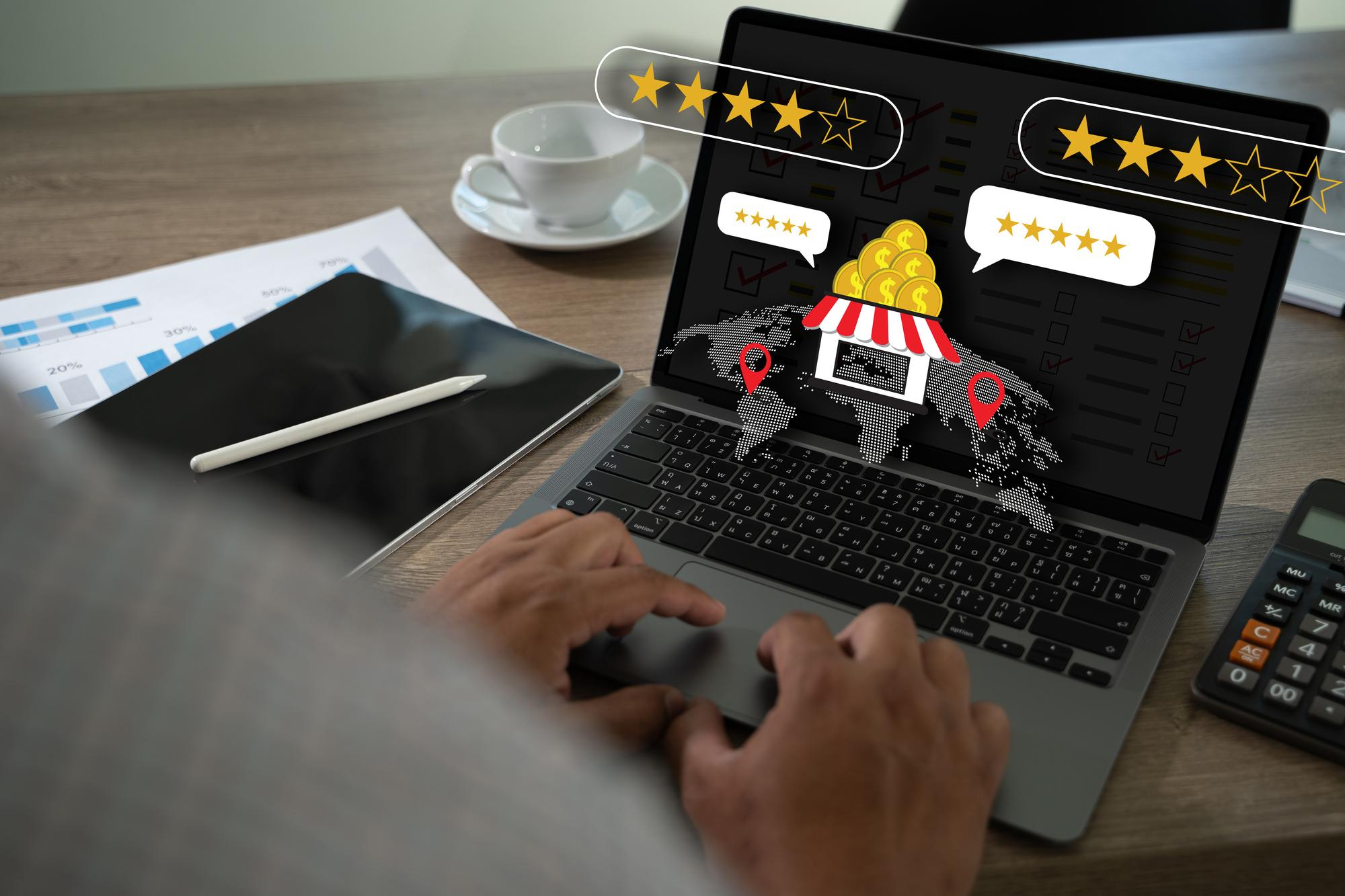
Understanding Why Google Reviews for UAE Businesses Matter So Much?
Two coffee shops sit across the street from each other in Business Bay. Same rent, roughly the same menu, similar hours. One has forty reviews and a rating hovering around 4.6. The other has six reviews and a 3.9. Ask ten people walking past which one they’d try first, and nine of them will point at the first shop without tasting a single cup from either.
That’s the entire logic of modern trust playing out in one small scene. A generation ago, a business could lean on a good location, a loud radio ad, or word passed between neighbors. None of that has disappeared, but it’s been joined by something faster and far more visible: what strangers say about a business online, sitting right next to its name every time someone searches for it.
Google Reviews for UAE Businesses have become one of the most influential, and least expensive, trust signals a company can build. There’s no media buy involved and no agency retainer required to get started. It’s simply what happens when customers are asked, at the right moment, to say something honest about their experience.
What makes this shift particularly pointed here is the pace and diversity of the market itself. A shopper in Dubai might be comparing a local boutique against three international competitors within the same page of search results. A patient choosing a dental clinic in Sharjah is often relying almost entirely on what past patients have written, simply because there’s no other way to judge quality before booking. Reviews fill a gap that used to take years of personal reputation to close, except now that reputation can shift in months rather than decades.
None of this makes reviews the same thing as branding, though the two get confused often. The difference between branding and marketing matters here too. A strong brand identity shapes how a business wants to be perceived, while reviews are a record of how customers actually experienced it. The gap between those two things, what a business claims and what its customers confirm, is exactly where trust is won or lost.
It also explains why smaller, independently run businesses can compete so effectively against much larger names. A multinational chain might outspend a local operator on advertising many times over, but it can’t buy its way into a strong review profile. That still has to be earned, one genuine interaction at a time, which levels a playing field that used to be tilted almost entirely toward whoever had the bigger budget.
How People Actually Decide Who to Trust?
The Gap Between What a Business Says and What Customers Believe?
Every business describes itself well. Every website says the coffee is exceptional and the service is attentive. Customers have learned, understandably, to treat that kind of language as marketing rather than fact. What they trust instead is a stranger with no reason to lie, describing an actual experience in their own words.
This is why a handful of specific, detailed reviews often carries more weight than a polished paragraph on a homepage. A review that mentions a barista by name, or notes that the air conditioning needed adjusting but the manager fixed it within minutes, reads as real in a way that no amount of professional copywriting can fake. They’re looking for evidence that the business behaves the way it says it does when nobody’s watching.
That’s also why customers tend to scroll straight past the five-star reviews and read the three-star ones first. A perfect record can look suspicious in a way that a mixed but honest one doesn’t. A three-star review that explains exactly what went wrong, and a business response that handled it well, often does more to convince a stranger than a wall of unqualified praise ever could.
Trust Signals for Tourists, Expats, and First-Time Visitors
The audience reading Google reviews in the UAE isn’t uniform, and that matters more here than in most markets. A long-term resident might already have a mental map of which neighborhoods have good food and which clinics to avoid. A tourist landing in Dubai for the first time has none of that. They’re often working from nothing but a phone screen and whatever first-time visitors trying to figure out where to eat can piece together in the hour before dinner.
For that visitor, star ratings and review counts aren’t a nice-to-have. They’re the entire decision-making framework. A business with plenty of recent, detailed reviews gives a stranger enough confidence to walk in without a local recommendation. A business with three reviews from two years ago gives them a reason to keep scrolling.
Setting Up the Foundation: Your Google Business Profile
Reviews don’t exist in isolation. They live inside a listing, and that listing needs to actually be there, complete and accurate, before reviews can do any of the work described above.
Claiming, Verifying, and Completing Every Section
Businesses that skip this step are, in effect, asking customers to trust a storefront with no sign above the door. A properly claimed and verified Google Business Profile is the starting point every UAE business needs before investing further energy into reviews. It’s what allows reviews to display prominently in search and Maps in the first place, alongside accurate hours, categories, and contact details. An incomplete profile buries good reviews under a listing that looks half-finished.
Why Your Listing and Your Website Can’t Be Separated?
A listing full of five-star reviews still sends a customer somewhere next, usually a website, or at minimum a Google Maps pin. If that next step is a broken link or a website that can’t back up what your reviews are already saying, the trust those reviews built starts leaking out almost immediately. Reviews open the door. Everything after that determines whether the customer actually walks through it.
Building a System That Actually Collects Reviews
Most UAE businesses don’t have a review problem because customers are unhappy. They have a review problem because nobody asked.
Timing: Asking at the Right Moment
The best moment to request a review is close to the experience itself, while the memory is still specific. A message sent the next morning, right after a good meal or a smooth service call, gets a far better response than one sent a week later once the details have faded. Waiting too long doesn’t just lower response rates. It also produces vaguer reviews, since the specific things a customer loved are harder to recall once time has passed.
Where to Place Your Review Link?
Making the ask easy matters as much as making it well-timed. A direct link on a receipt, a QR code at the counter, a short WhatsApp message after checkout, each one removes friction between a customer thinking “that was good” and actually telling Google about it. For UAE businesses running across multiple branches, or serving customers who scan the same printed material in different emirates, a single QR code that routes each customer to the right page solves a very specific headache. Instead of managing five different printed codes for five locations, one code intelligently sends each scan to the correct listing.
Realistic Review Benchmarks by Industry
What counts as “enough” reviews varies a lot by sector, and setting the wrong target can leave a business either complacent or needlessly discouraged.
- Restaurants and cafés: competition is steep enough that closer to 100 reviews within the first year is a realistic target.
- Professional services such as legal, accounting, or consulting: 30 to 50 solid reviews tends to put a firm ahead of most local competitors, since fewer clients leave feedback in this category to begin with.
- Healthcare providers: somewhere around 50 to 80 reviews is competitive, and patients tend to read them closely before booking an appointment.
- Retail: 50 or more reviews mentioning specific products supports both local visibility and buyer confidence at the same time.
The number that matters most, though, isn’t the total count. It’s consistency. A business earning five new reviews a month, every month, tends to outperform one that gets fifty in a single push and then goes quiet for a year. Google’s algorithm reads that steady pattern as a sign of an active, trustworthy business, not a one-time campaign.
Responding to Reviews: Where Reputation Is Actually Built?
Collecting reviews is only half the job. How a business responds to them, especially the difficult ones, tends to matter more to future customers than the review itself.
Replying to Positive Reviews Without Sounding Like a Template
A generic “thank you for your feedback” copied under every five-star review reads as hollow, even when the sentiment behind it is genuine. Referencing something specific, the dish someone ordered, the service they mentioned, the day they visited, turns a routine reply into proof that someone actually read what the customer wrote.
Handling Negative Reviews Without Losing Composure
Negative reviews feel personal, especially for small business owners who have put years into building something. But a public, defensive reply almost always does more damage than the original review ever could. Future customers reading that exchange aren’t judging the business by the mistake that happened. They’re judging it by how the business handled being told about it. A calm, specific response that acknowledges the issue and offers a way to make it right often builds more trust than a page full of five-star praise, simply because it shows the business behaves the same way in public as it presumably does in private.
Dealing With Fake or Spam Reviews
Every business eventually runs into a review that doesn’t reflect a real interaction, sometimes from a competitor, sometimes from someone who never actually visited. Google allows businesses to flag these for removal, though the process can take time and doesn’t always succeed. Arguing publicly with a suspected fake review rarely helps. A brief, professional reply noting there’s no record of the visit, followed by a formal flag through Google’s reporting tools, is the more effective path.
What ties all three of these situations together is tone. A business that sounds warm when things go well and defensive the moment something goes wrong is, in effect, showing two different personalities to the public. Keeping the same measured, respectful voice across every kind of review, good, bad, or clearly fake, is often what separates a business that looks professionally managed from one that looks like it’s improvising.
What Strong Reputation Looks Like Across Industries?
Cafés and Restaurants Winning on Visual Trust
In food and beverage, reputation isn’t built through star ratings alone. It’s built visually, one photo and one tagged post at a time. Instagram-first restaurants have essentially turned reputation management into a public performance, where the plating, the lighting, and the ambience get judged before a single review is even written. Dubai’s most talked-about cafés tend to succeed on exactly this combination: consistent quality that holds up once the visit actually happens, paired with a space people already want to photograph.
Hospitality and Hotels Managing Guest Perception
Hotels operate under a slightly different kind of pressure, because a single stay touches dozens of small moments, check-in, housekeeping, breakfast, the front desk at 2 a.m., any one of which can end up shaping a review. Many properties have started collecting feedback at the point where it’s easiest to capture it, using QR-based feedback tools built specifically for hotels placed in rooms or at checkout, rather than hoping a guest remembers to leave a review days later once they’re already home.
Restaurants, Retail, and Round-the-Clock Spots
Not every strong reputation depends on fine dining or a polished interior. Some of the most consistently well-reviewed spots in the city are the ones open at 3 a.m. serving shawarma to a queue of taxi drivers, or the grocers that never run out of the one thing someone needed at midnight. The best 24/7 food spots in Dubai often carry review profiles built almost entirely on reliability rather than luxury, proof that consistency, not spectacle, is usually what reviewers actually reward. The same pattern shows up further inland too. Some of Abu Dhabi’s most talked-about restaurants have built their reputation less on trend and more on simply delivering the same experience, visit after visit.
Reputation Management Beyond the Star Rating
A star rating is useful shorthand, but it’s only ever a summary of something much larger. The businesses that manage their reputation well tend to look past the number itself and pay attention to the fuller picture surrounding it.
Social Sentiment and Brand Mentions
A star rating is a summary. The conversation happening around a business on social media, in comments, in DMs, and in group chats, is the detail behind that summary. The businesses that manage reputation well tend to treat these as connected rather than separate. A complaint that surfaces on Instagram before it ever reaches Google is still worth acting on with the same urgency.
Serving a Bilingual, Multicultural Audience
A UAE audience reads and writes reviews in more than one language, often within the same comment section. A business that only monitors English-language feedback is missing a real portion of what customers are actually saying, particularly in Arabic. Watching for both isn’t really about translation software so much as making sure someone on the team is reading everything that comes in, regardless of which language it arrives in.
Turning Feedback Into Something Useful
The most sophisticated operators don’t treat reviews as a scoreboard to check occasionally. They treat them as a stream of information about what’s actually happening on the ground. How Dubai restaurants turn feedback into personalized service is a good example of this in practice: a pattern of guests requesting the same dish modification, or repeatedly praising a specific server, becomes something the business can act on directly, rather than just a number sitting on a dashboard somewhere.
When It’s Time to Bring in Outside Help?
For businesses without the internal bandwidth to monitor and respond consistently, especially those managing multiple locations or a bilingual audience, outside support can close that gap. Before signing with anyone, it’s worth understanding what to check before hiring a digital marketing agency in the UAE specifically, since reputation work done poorly can do more harm than doing nothing at all.
Agencies offering full-service digital marketing support often fold reputation monitoring into a broader package that also covers SEO and content, which matters, because reviews rarely operate in isolation from the rest of a business’s digital presence.
The Connection Between Reviews and Local Search Rankings
How Ratings Influence the Local Search Results?
When someone searches for a service “near me,” Google typically surfaces three businesses at the top of the results before anything else, a section commonly known as the local pack. Review count and rating are among the clearest signals Google uses to decide who earns that spot, alongside proximity and relevance to the search.
A business sitting on page two of local search results is functionally invisible to nearby searches, no matter how good the actual service is.
Why Review Velocity Beats a One-Time Push?
Local search algorithms reward activity, not just accumulation. How local SEO strategy has evolved reflects this shift clearly: search engines increasingly weigh signals like recency and consistency over sheer volume. The connection between local rankings and Google Reviews for UAE Businesses ties directly back to that same idea, a business collecting reviews steadily over time tends to outrank one that gathered a large batch once and then went silent.
Common Mistakes That Quietly Damage Online Reputation
Some of the most damaging habits aren’t dramatic. They’re small, repeated choices that add up over months.
- Obsessing over the overall star number while ignoring what individual reviews actually say.
- Letting negative reviews sit unanswered, which reads as indifference rather than neutrality.
- Paying for or incentivizing fake reviews, which risks account suspension and rarely fools customers anyway.
- Responding inconsistently, warm and personal on good days, curt or defensive on bad ones.
- Treating reviews as a one-off task completed during setup rather than an ongoing part of running the business.
Many of these habits show up as part of a wider pattern. The broader digital marketing challenges UAE food businesses deal with rarely start with reviews specifically. They usually start with limited time, unclear ownership of who’s responsible for what, and marketing treated as an afterthought rather than a core function. Reputation gets swept up in that same neglect.
None of these mistakes are difficult to fix individually. What makes them costly is how quietly they accumulate. A business rarely loses customers over a single unanswered review. It loses them gradually, as a pattern of small neglect becomes visible to anyone who scrolls far enough down the page.
Making Reputation Part of How You Run the Business?
The businesses that handle this well don’t think of reviews as a task to complete once and move on from. They treat it the way they’d treat cleaning the storefront or restocking shelves, a routine, ongoing part of operating, not a campaign with a start and end date.
That shift in mindset changes everything else. Asking for feedback becomes a habit built into the service itself, not an afterthought remembered occasionally. Responding to reviews becomes something a specific person owns, rather than something that only happens when someone notices a bad one. And over time, the reputation that results from this consistency becomes very hard for a competitor to copy quickly, because it was never built in a single push to begin with.
In a market where customers have more choices than ever and less patience for guesswork, that kind of steady presence is often the difference between a business people simply visit once, and one they keep coming back to and telling other people about.
