


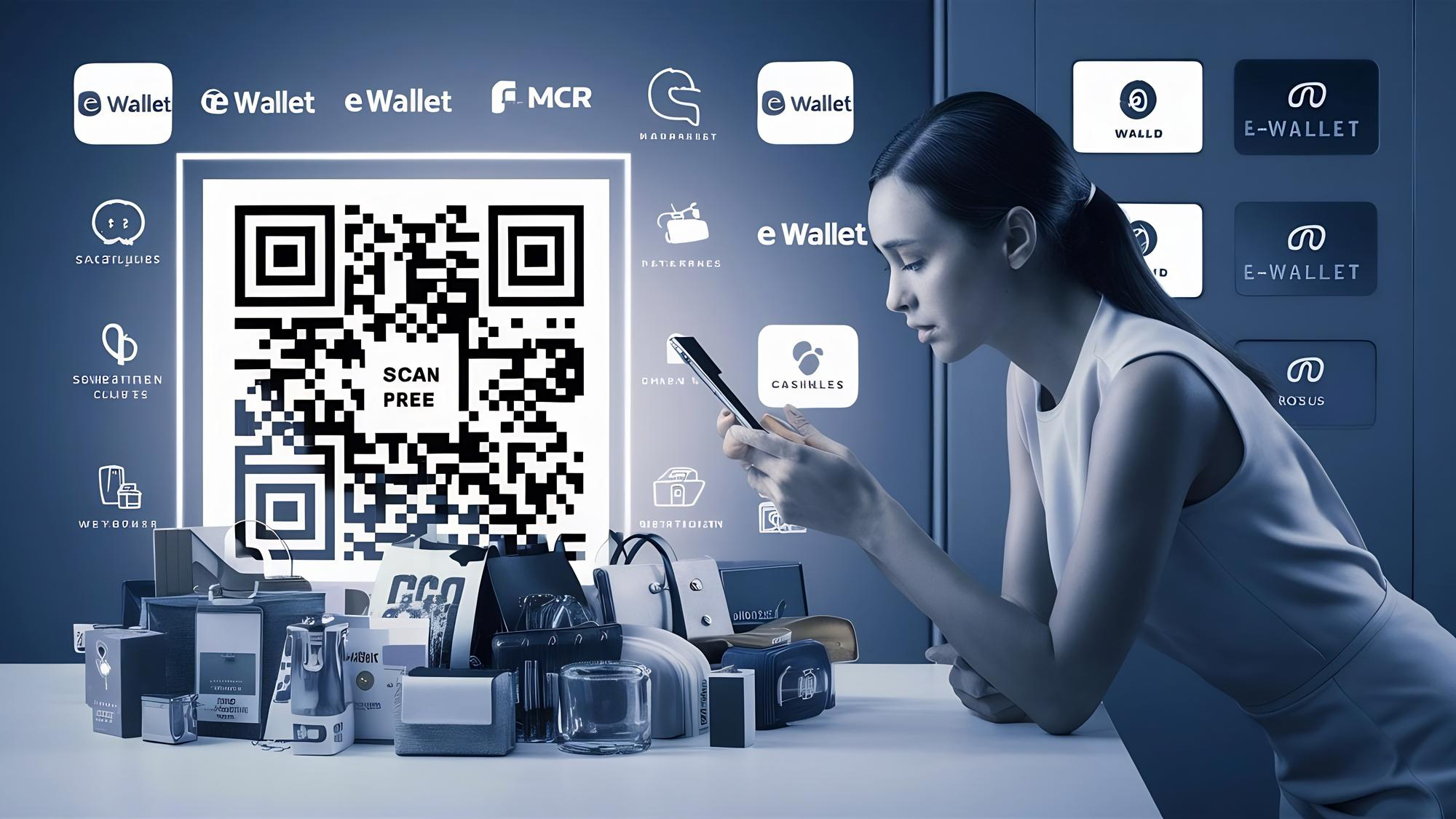
Boosting Merchandise Sales with QR Code–Driven Marketing Campaigns: A Strategic Guide
The retail landscape has fundamentally transformed. Traditional print media, while still valuable for capturing attention, lacks the actionability that modern consumers expect. When a customer sees an advertisement for merchandise in a magazine or on a billboard, they face a friction-filled journey: pull out their smartphone, type a website URL, search for the product, navigate through pages, and finally make a purchase decision. Many potential customers abandon this process before completion. This is where QR code-driven marketing campaigns revolutionize merchandise sales by eliminating friction and creating seamless pathways from awareness to purchase.
Tapping into the UAE’s booming e-commerce market, which is projected to more than double in the coming years, is a massive opportunity for merchandise sales. In a mobile-first environment where consumers expect instant gratification, QR codes serve as the essential link between offline marketing and online storefronts, driving traffic and conversions in one of the world’s most digitally connected regions.
QR code marketing campaigns represent a strategic bridge between offline and online retail experiences. By making print media actionable, QR codes enable customers to instantly access product information, exclusive offers, and interactive experiences with a single scan. For retailers and brands, this technology delivers measurable results: increased engagement, higher conversion rates, and deeper customer insights. The statistics are compelling—40% of global QR code scans are attributed to marketing campaigns, and the consumer goods industry has experienced a 247% jump in QR code usage between 2021 and 2023. This explosive growth reflects a fundamental shift in how successful brands approach merchandise sales.
Understanding QR Code Technology for Merchandise Marketing
Before implementing QR code-driven marketing campaigns, it’s essential to understand what makes this technology so effective for merchandise sales. QR codes are two-dimensional barcodes that store alphanumeric information, accessible through any smartphone camera. Unlike traditional barcodes that require specialized scanning equipment, QR codes democratize information access—any customer with a smartphone can instantly retrieve detailed product information, promotional offers, or interactive content.
The effectiveness of QR codes for merchandise sales stems from their unique advantages over traditional marketing methods. First, they eliminate the friction between awareness and action. A customer interested in a product can scan a code and access relevant information or purchasing options within seconds. Second, QR codes are remarkably cost-effective. Creating and printing QR codes costs virtually nothing, and they can be integrated into existing marketing materials without significant additional investment. Third, QR codes are trackable. Unlike traditional print media where engagement remains invisible, QR code platforms provide detailed analytics revealing how many customers scanned codes, when they scanned them, what devices they used, and whether scans converted to purchases.
The scalability of QR code marketing campaigns makes them particularly attractive for businesses of all sizes. A small local retailer can implement QR codes on product packaging just as effectively as a multinational corporation can deploy them across global marketing campaigns. This democratization of advanced marketing technology enables smaller businesses to compete with larger competitors by leveraging the same sophisticated tools and strategies.
Driving Product Information Access Through QR Codes
Product packaging presents a fundamental constraint: limited space for information. Manufacturers must prioritize what information appears on physical packaging, often omitting details that customers want to know. QR codes solve this constraint by providing access to comprehensive product information beyond what fits on labels. When customers scan QR codes on merchandise, they can access detailed product specifications, ingredient lists, sourcing information, sustainability practices, usage instructions, safety warnings, and video demonstrations.
This expanded information access builds customer trust and confidence in purchasing decisions. A customer considering a food product can scan a QR code to verify ingredient sourcing and nutritional information. A customer evaluating a technology product can watch installation videos and see detailed specifications. A customer concerned about environmental impact can learn about sustainable manufacturing practices. By providing transparent, comprehensive product information, brands demonstrate confidence in their products and respect for customer intelligence.
The psychology of informed purchasing is powerful. Customers who access detailed product information before purchase experience higher satisfaction, fewer returns, and greater brand loyalty. They feel they made educated decisions rather than impulse purchases. This informed purchasing behavior translates directly to improved customer lifetime value and reduced return rates—both critical metrics for merchandise sales profitability.
QR codes also enable brands to tell their product stories in ways that packaging labels cannot. A craft beverage company can scan a QR code to watch videos about their production process, meet the artisans behind the product, and learn about the brand’s values and mission. This storytelling deepens emotional connections between customers and brands, transforming merchandise from commodity products into meaningful purchases aligned with customer values.
Distributing Mobile Coupons and Exclusive Offers
One of the most direct applications of QR code-driven marketing campaigns is distributing mobile coupons and exclusive promotional offers. Rather than printing physical coupons that customers must clip, store, and remember to bring to checkout, QR codes deliver digital coupons instantly to customer smartphones. This approach eliminates friction from the coupon process while providing brands with detailed tracking of coupon usage.
The mechanics are straightforward: a customer sees a QR code on merchandise packaging or promotional material, scans it, and receives an instant discount code or digital coupon. The customer can apply this coupon immediately to their purchase, either in-store using their smartphone or online at checkout. From the brand’s perspective, each coupon redemption generates trackable data revealing which customers engaged with which offers, enabling sophisticated analysis of promotional effectiveness.
Mobile coupons distributed through QR codes drive immediate sales while generating valuable customer data. Brands can test different discount levels, promotional messages, and offer types, measuring which combinations generate the highest redemption rates and profitability. This data-driven approach to promotions represents a significant advancement over traditional coupon strategies where effectiveness remains largely invisible.
Limited-time offers distributed through QR codes create urgency that drives immediate purchasing behavior. A customer scanning a QR code might discover a 24-hour exclusive discount or a limited-quantity offer, motivating them to make purchasing decisions quickly. This urgency, when applied strategically, increases conversion rates and accelerates sales velocity. Brands can also use QR codes to distribute exclusive online-only deals, driving traffic to e-commerce platforms where customers might purchase additional products beyond the initially promoted item.
Creating Interactive Customer Experiences
QR code-driven marketing campaigns extend far beyond simple information delivery. Modern QR codes unlock interactive experiences that engage customers on emotional and experiential levels. Augmented reality (AR) integration with QR codes enables customers to virtually interact with products before purchase. A furniture retailer can scan a QR code to see how furniture would appear in their living room using their smartphone camera. A cosmetics brand can enable customers to virtually try on makeup using AR filters. A fashion retailer can show how clothing would look on different body types and skin tones.
A single QR code on a piece of merchandise can now open up a whole world of content by linking to a curated list of resources. Imagine a customer scanning a code and being able to choose between watching a product tutorial, browsing the entire collection, following your brand on social media, or leaving a review. This multi-link capability transforms a simple product tag into a rich, interactive content hub, significantly enhancing the customer’s post-purchase experience.
These interactive experiences address a critical challenge in retail: the inability to physically experience products before purchase. By enabling virtual product trials, QR codes reduce purchase anxiety and increase conversion rates. Customers who virtually try products before purchase experience higher satisfaction and lower return rates compared to customers who purchase without this interactive experience.
Gamification represents another powerful interactive application of QR code-driven marketing campaigns. Brands can create games, contests, and challenges accessible through QR codes, incentivizing customer engagement and merchandise purchases. A beverage brand might hide QR codes on limited-edition packaging that unlock entry into prize drawings. A sports equipment manufacturer might create QR code-based challenges where customers scan codes to unlock achievement badges and compete on leaderboards. These gamified experiences transform merchandise purchases into participatory brand experiences, deepening customer engagement and loyalty.
Personalization through QR codes creates individualized brand experiences that resonate with specific customers. A gift merchandise company can enable customers to scan QR codes to personalize products with custom messages, photos, or videos. A luxury brand can provide exclusive access to limited-edition product previews or behind-the-scenes brand content for loyal customers. These personalized experiences create emotional connections that transcend typical transactional relationships.
Integrating Social Media Engagement
QR code-driven marketing campaigns seamlessly integrate merchandise sales with social media engagement, extending brand reach beyond individual customers to their entire social networks. QR codes can link directly to brand social media pages, enabling customers to follow brands, like pages, and share content with a single scan. This integration transforms merchandise purchases into social media engagement opportunities.
When customers scan QR codes and follow brands on social media, they join communities where brands share new product announcements, behind-the-scenes content, customer stories, and exclusive offers. This ongoing engagement maintains brand awareness and drives repeat purchases. Customers who follow brands on social media purchase more frequently and spend more per transaction compared to customers without this social connection.
Hashtag-driven campaigns amplified through QR codes create user-generated content opportunities that extend brand reach exponentially. A brand might place QR codes on merchandise packaging that direct customers to a branded hashtag campaign, encouraging them to share photos of their purchases with the hashtag. This user-generated content serves as authentic social proof, influencing other potential customers and extending brand reach to followers of participating customers.
Influencer collaboration through QR codes enables brands to leverage influencer audiences for merchandise sales. An influencer can include QR codes in their content that direct followers to exclusive merchandise offers or influencer-curated product collections. This integration of influencer marketing with QR code technology creates trackable pathways from influencer recommendations to actual merchandise sales, enabling brands to measure influencer marketing ROI with precision.
Connecting to Loyalty Programs
Loyalty programs represent one of the most effective customer retention strategies in retail, yet many customers find enrollment processes cumbersome. QR code-driven marketing campaigns simplify loyalty program enrollment by enabling customers to scan codes and instantly join programs. This frictionless enrollment dramatically increases program participation rates.
Once enrolled through QR codes, customers can scan codes on merchandise to earn loyalty points, access exclusive member-only offers, and track rewards progress. This integration of QR codes with loyalty programs creates multiple touchpoints where customers engage with brands, increasing purchase frequency and average transaction value. Customers enrolled in loyalty programs spend significantly more than non-members, making loyalty program enrollment through QR codes a high-ROI marketing investment.
QR codes also enable personalized loyalty experiences where member-only offers are customized based on individual purchase history and preferences. A customer who frequently purchases specific product categories receives personalized offers for those categories, increasing relevance and conversion rates. This personalization transforms loyalty programs from generic discount programs into sophisticated customer relationship management tools.
Event and Experiential Merchandise Marketing
Events represent powerful opportunities for merchandise sales, and QR codes enhance event merchandise marketing in multiple ways. Event-specific QR codes on merchandise create exclusive experiences tied to specific events, building emotional connections between customers and events. A concert attendee purchasing merchandise can scan a QR code to access exclusive concert footage, meet-and-greet photos, or post-event content. A sports event attendee can scan codes to access player statistics, highlight videos, or exclusive interviews.
These event-specific experiences extend customer engagement beyond the event itself, maintaining emotional connections and driving repeat purchases. Customers who access exclusive event content through QR codes become more invested in future events, increasing attendance and merchandise sales for subsequent events. This creates a virtuous cycle where QR code-driven experiences drive loyalty that translates to increased event attendance and merchandise sales.
Post-event engagement through QR codes maintains customer relationships after events conclude. Brands can direct customers to surveys, exclusive post-event content, or early-bird offers for future events. This ongoing engagement prevents the typical post-event engagement cliff where customer interest drops sharply after events end.
Strategic QR Code Placement
The effectiveness of QR code-driven marketing campaigns depends critically on strategic placement. QR codes must be visible, accessible, and positioned where customers naturally look. Optimal placement locations vary by product type and customer behavior patterns. For packaged goods, prominent placement on the front of packaging increases visibility compared to placement on back panels. For point-of-sale displays, placement at eye level increases scanning rates compared to placement above or below eye level.
Visibility and accessibility require careful consideration of scanning distance and angle. QR codes must be large enough to scan from typical viewing distances—generally at least one inch by one inch for codes scanned from arm’s length distance. Codes placed in high-traffic areas where customers naturally pause, such as checkout areas or waiting areas, generate higher scanning rates than codes in low-traffic areas.
Integration with packaging design ensures that QR codes enhance rather than detract from product aesthetics. Poorly designed QR codes can make products appear cheap or cluttered. Well-designed codes that incorporate brand colors, logos, and design elements become visual assets that enhance packaging appeal while maintaining scannability.
Design Optimization for Maximum Impact
QR code design significantly influences scanning rates and customer perception. Generic black-and-white QR codes lack brand personality and may reduce customer willingness to scan. Customized QR codes that incorporate brand colors, logos, and design elements create more compelling visual experiences while maintaining full scannability. A luxury brand might customize QR codes with metallic colors and elegant design elements. A playful brand might incorporate cartoon characters or vibrant colors into QR codes.
Professional execution in QR code design ensures that codes remain scannable while reflecting brand identity. Poorly executed customization can render codes unreadable, frustrating customers and wasting marketing investment. Working with experienced QR code designers ensures that customization enhances rather than compromises functionality.
Visual appeal extends beyond QR code design to the surrounding context. QR codes should be accompanied by compelling messaging explaining what customers will receive by scanning. A simple “Scan for exclusive offer” generates lower scanning rates than “Scan for 20% off your next purchase” or “Scan to see how this product is made.” Clear, benefit-focused messaging increases scanning rates by setting customer expectations and motivating action.
Mobile Experience Optimization
The customer experience after scanning a QR code determines whether scanning converts to engagement and sales. Mobile experience optimization is therefore critical to QR code campaign success. Landing pages accessed through QR codes must load quickly on mobile devices—slow-loading pages frustrate customers and increase bounce rates. Optimizing images, minimizing code, and leveraging content delivery networks ensure fast loading times across different network conditions.
Mobile-responsive design ensures that landing pages display correctly on different screen sizes and orientations. Customers scanning QR codes use various devices with different screen dimensions, and responsive design ensures consistent experiences across all devices. Navigation should be simplified for mobile users, with clear pathways to desired actions such as purchasing, coupon redemption, or loyalty program enrollment.
Checkout processes must be streamlined for mobile users. Lengthy forms with numerous required fields increase abandonment rates. Minimizing form fields, enabling autofill, and offering mobile payment options like Apple Pay and Google Pay reduce friction and increase conversion rates. Every additional step in the checkout process increases abandonment risk, making simplification critical for conversion optimization.
Creating Compelling Call-to-Action
The messaging surrounding QR codes significantly influences scanning rates. Generic calls-to-action like “Scan QR code” generate lower response rates than benefit-focused calls-to-action that clearly communicate what customers will receive. Effective calls-to-action answer the customer question: “What’s in it for me?” A call-to-action stating “Scan for exclusive 20% off” clearly communicates the benefit. A call-to-action stating “Scan to see how we make this product” appeals to customers interested in transparency and sustainability.
Urgency and scarcity create psychological motivation for immediate action. Calls-to-action emphasizing limited-time offers, limited quantities, or exclusive access motivate customers to scan immediately rather than postponing. “Scan for 24-hour exclusive offer” creates more urgency than “Scan for an offer.” “Scan for exclusive member-only access” creates scarcity that motivates loyalty program enrollment.
Persuasive messaging that aligns with customer values and motivations increases scanning rates. Understanding target customer psychology enables crafting calls-to-action that resonate emotionally. Environmentally conscious customers respond to calls-to-action emphasizing sustainability. Value-conscious customers respond to calls-to-action emphasizing savings. Quality-focused customers respond to calls-to-action emphasizing product excellence.
Real-World Success Stories
KitKat’s innovative QR code campaign demonstrates the power of QR code-driven merchandise marketing. The brand placed QR codes on chocolate packaging that directed customers to YouTube videos. When customers scanned codes while enjoying KitKat products, they accessed entertainment content perfectly timed with their product consumption. This integration of product consumption with entertainment content created memorable brand experiences that increased customer engagement and brand affinity.
Nike’s product marketing leverages QR codes to provide detailed product information and exclusive content. Customers scanning QR codes on shoe packaging access videos showing shoe technology, athlete testimonials, and styling tips. This comprehensive product information reduces purchase anxiety and increases customer satisfaction, translating to higher conversion rates and lower return rates.
Adidas’s “QR to Qatar” campaign exemplifies how QR codes enable experiential marketing at scale. The campaign placed QR codes in promotional materials that directed customers to exclusive content related to major sporting events. Customers scanning codes accessed behind-the-scenes footage, athlete interviews, and exclusive merchandise offers. This experiential approach transformed merchandise marketing from transactional to emotional, deepening customer connections with the brand.
Measuring Campaign Success
Successful QR code-driven marketing campaigns require clear measurement frameworks that track performance against defined objectives. Key performance indicators should align with business goals, whether those goals are increasing sales, building loyalty program membership, or generating customer data. Common KPIs include scan volume, conversion rates, revenue attributed to campaigns, and customer acquisition costs.
Analytics and tracking capabilities distinguish effective QR code platforms from basic alternatives. Dynamic QR codes enable real-time tracking of scan metrics including scan volume, scan locations, device types used, and scan timing. This granular data reveals which marketing channels drive the most engagement, which geographic regions show the strongest response, and which times of day generate peak scanning activity.
ROI calculation requires attributing revenue to QR code campaigns and comparing this revenue to campaign costs. A merchandise campaign costing $5,000 to implement that generates $50,000 in attributed revenue delivers a 10x ROI. Tracking this attribution requires integrating QR code analytics with sales data, enabling clear measurement of campaign effectiveness. This data-driven approach enables continuous optimization, reallocating budget to highest-performing campaigns and improving lower-performing campaigns.
Analyzing Customer Behavior
QR code analytics reveal detailed customer behavior patterns that inform marketing strategy optimization. Scan location data reveals which physical locations generate the most engagement, enabling retailers to optimize merchandise placement and promotional focus. A retailer discovering that QR codes in a specific store location generate 10x more scans than other locations can investigate what factors drive this success and replicate them elsewhere.
Device type analysis reveals customer technology preferences and enables optimization for dominant device types. If 80% of scans occur on iPhones, optimizing the mobile experience for iOS becomes a priority. If scans occur evenly across Android and iOS devices, ensuring consistent experiences across both platforms becomes critical.
Conversion pattern recognition reveals which customer segments show the highest propensity to convert from scanning to purchasing. A brand might discover that customers scanning QR codes on certain product categories convert at 15% rates while other categories convert at only 5%. This insight enables focusing promotional efforts on high-converting categories and investigating why certain categories underperform.
Dynamic QR Codes for Advanced Tracking
To fully leverage the power of QR codes in merchandise marketing, businesses must look beyond basic, static code generators. An enterprise-grade QR code builder provides essential features like dynamic editing, which allows for real-time updates to linked content without reprinting, and detailed analytics to track campaign performance. These advanced capabilities are what turn a simple QR code from a novelty into a powerful, data-driven marketing tool that can adapt to changing business needs and provide measurable ROI.
Dynamic QR codes represent an advanced evolution beyond static codes, enabling real-time analytics and campaign optimization. Unlike static codes with fixed destinations, dynamic codes can be updated after creation, enabling brands to change landing page destinations without reprinting marketing materials. This flexibility proves invaluable when campaigns require adjustments or when seasonal promotions need updating.
Real-time analytics dashboards provide instant visibility into campaign performance, enabling rapid response to emerging trends. A brand launching a new merchandise campaign can monitor scanning rates in real-time, identifying which marketing channels drive the most engagement within hours of campaign launch. This rapid feedback enables quick optimization of underperforming channels.
Campaign optimization based on real-time data enables continuous improvement throughout campaign duration. A brand discovering that certain geographic regions show lower engagement can increase promotional spending in those regions or investigate barriers to engagement. A brand discovering that certain times of day generate peak scanning activity can schedule promotional pushes during those times to maximize impact.
Best Practices for Campaign Implementation
Successful QR code-driven marketing campaigns require systematic planning and execution. Planning and strategy development should begin with clear objective definition. Are you seeking to increase merchandise sales, build loyalty program membership, generate customer data, or drive social media engagement? Clear objectives guide all subsequent decisions regarding QR code placement, messaging, landing page design, and success metrics.
Testing and quality assurance ensure that QR codes function correctly across different devices and scanning applications. Testing should verify that codes scan reliably from various distances and angles, that landing pages load correctly on different devices, and that checkout processes function smoothly. Identifying and fixing issues before campaign launch prevents customer frustration and wasted marketing investment.
Launch and monitoring involve deploying campaigns across selected channels and closely monitoring performance. Initial monitoring should verify that scanning rates meet expectations and that conversion rates align with projections. Early identification of underperformance enables rapid course correction before significant budget is wasted on ineffective campaigns.
Common Challenges and Solutions
Low scanning rates represent a common challenge in QR code-driven marketing campaigns. Scanning rates depend on multiple factors including QR code visibility, call-to-action messaging, customer awareness of QR code functionality, and perceived value of scanning. Addressing low scanning rates requires investigating root causes. Are customers not seeing the QR codes? Are they seeing codes but not understanding why they should scan? Are they scanning but finding poor mobile experiences that discourage engagement?
Poor mobile experience represents another significant challenge. Customers scanning QR codes expect fast-loading pages with intuitive navigation and clear value propositions. Slow-loading pages, cluttered layouts, and confusing navigation frustrate customers and reduce conversion rates. Addressing mobile experience challenges requires testing landing pages on various devices, optimizing page speed, and simplifying navigation.
Tracking effectiveness challenges arise when QR code analytics don’t integrate with sales data, making it difficult to attribute revenue to campaigns. Addressing this challenge requires implementing tracking systems that connect QR code scans to customer purchases, either through unique coupon codes, customer accounts, or other tracking mechanisms. This integration enables clear measurement of campaign ROI.
Future Trends in QR Code Merchandise Marketing
Augmented reality evolution will increasingly integrate with QR codes, enabling more sophisticated interactive experiences. Future AR experiences might enable customers to visualize products in their homes with photorealistic accuracy, try on clothing with precise fit visualization, or interact with products in immersive virtual environments. These advanced experiences will drive higher engagement and conversion rates.
Personalization at scale will enable brands to deliver customized merchandise experiences to individual customers based on purchase history, preferences, and behavior patterns. A customer who frequently purchases sustainable products might scan a QR code and receive personalized content emphasizing a product’s environmental benefits. A customer interested in luxury might receive content emphasizing premium quality and exclusivity.
Blockchain integration will enable product authentication and supply chain transparency through QR codes. Customers scanning QR codes could verify product authenticity, view complete supply chain information, and access blockchain-verified certificates of authenticity. This transparency builds trust and enables premium pricing for authenticated products.
Emerging Technology Integration
AI-powered recommendations will analyze customer behavior data to deliver personalized product recommendations through QR codes. A customer scanning a QR code might receive recommendations for complementary products based on their purchase history and similar customers’ preferences. These intelligent recommendations increase average transaction value and customer satisfaction.
Voice-activated access will enable customers to access QR code content through voice commands, improving accessibility for customers with mobility limitations. A customer might say “Scan QR code” to their voice assistant, which would access the code and provide information verbally or through text-to-speech.
Predictive analytics will forecast which customers are most likely to respond to QR code campaigns, enabling precise targeting of promotional efforts. Brands can focus QR code campaigns on high-propensity customers, maximizing ROI and reducing wasted impressions on low-propensity customers.
Getting Started with QR Code-Driven Merchandise Marketing
QR code-driven marketing campaigns represent a proven, measurable approach to boosting merchandise sales in an increasingly digital retail environment. The statistics are clear: 40% of global QR code scans are attributed to marketing campaigns, and the consumer goods industry has experienced explosive growth in QR code adoption. This growth reflects a fundamental recognition that QR codes deliver tangible business results.
The key takeaway is that QR codes are not simply technological novelties but strategic business tools that drive measurable outcomes. When implemented strategically with clear objectives, compelling calls-to-action, optimized mobile experiences, and rigorous performance measurement, QR code-driven marketing campaigns deliver impressive ROI. They eliminate friction from customer journeys, provide valuable customer insights, and create memorable brand experiences that drive loyalty and repeat purchases.
For retailers and brands seeking to boost merchandise sales, the question is not whether to implement QR code-driven marketing campaigns but how to implement them effectively. The technology is proven, the tools are accessible, and the potential returns are substantial. Starting with a single pilot campaign enables learning and optimization before scaling to broader implementation. By beginning today, brands position themselves to capture the significant competitive advantages that QR code-driven merchandise marketing delivers.
