

Introduction to Social Media for Food Businesses
In today’s digital-first marketplace, social media has become the primary discovery channel for food businesses. When customers search for restaurants, cafés, or food delivery options, they turn to social media platforms before searching Google or asking friends. For UAE food businesses, establishing strong social media presence is no longer a marketing luxury—it’s an essential business requirement. The journey from initial visibility on social media platforms to converting followers into paying customers represents a critical business process that separates thriving food businesses from struggling competitors.
The Importance of Social Media Visibility
Social media visibility determines whether potential customers discover your food business. Without visibility, even the best food and service go unnoticed. Social media platforms including Instagram, TikTok, and Facebook provide food businesses with opportunities to reach thousands of potential customers with minimal advertising spend. A single viral post showcasing your signature dish can expose your food business to tens of thousands of potential customers within hours.
The importance of visibility extends beyond initial customer acquisition. Regular social media presence keeps your food business visible to existing customers, encouraging repeat visits and loyalty. Customers who see your food business consistently on social media develop familiarity and trust, making them more likely to visit and recommend your business to others.
Social Media Discovery for Food Businesses
Research consistently shows that 72% of consumers discover restaurants through social media. This staggering statistic demonstrates that social media is where food business customers are looking. When someone is hungry and searching for dinner options, they’re likely scrolling through Instagram, checking TikTok videos, or searching Facebook for restaurant recommendations. If your food business isn’t visible on these platforms, you’re missing the majority of potential customers.
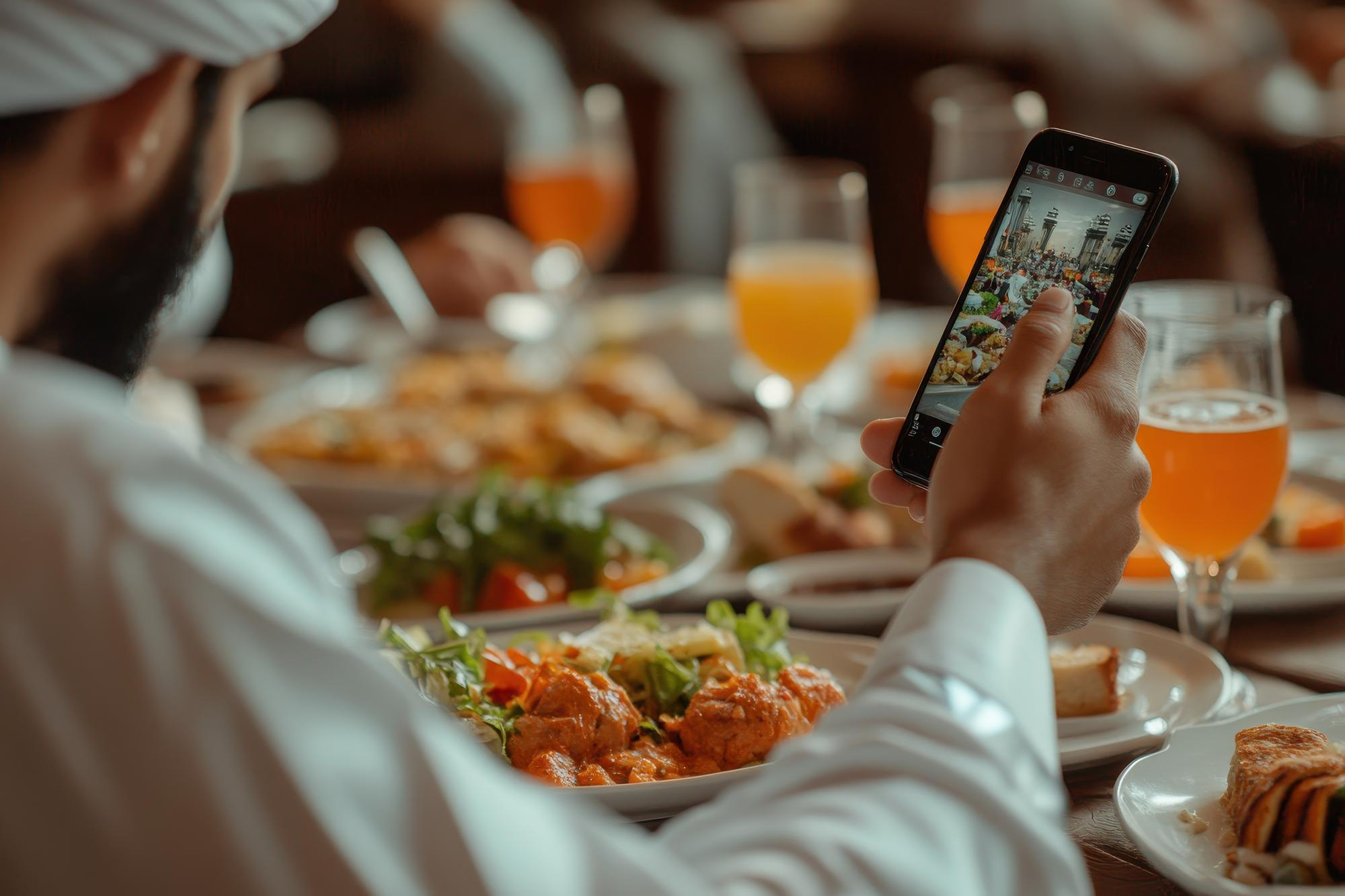
The discovery process on social media typically begins with visual content. A mouth-watering photo of your signature dish, a video of food preparation, or a behind-the-scenes glimpse of your restaurant catches attention and sparks interest. This initial visibility leads to profile visits, where potential customers learn more about your food business. Compelling profile content, positive reviews, and clear calls-to-action convert interested visitors into customers.
UAE Food Business Landscape
The UAE food business market is highly competitive and rapidly evolving. Dubai, Abu Dhabi, and other emirates host thousands of restaurants, cafés, and food delivery services competing for customer attention. The UAE’s diverse population includes local residents, expats from around the world, and tourists seeking dining experiences. This diversity creates both opportunities and challenges for food businesses.
UAE consumers are tech-savvy and expect professional digital presence from food businesses. They research restaurants on social media before visiting, read online reviews, and make purchasing decisions based on digital information. Food businesses that excel at social media marketing gain significant competitive advantage over those with weak or no social media presence. For UAE food businesses, social media effectiveness directly correlates with business success.
Understanding the Social Media Landscape
To use social media effectively, food businesses must understand how social media platforms work and how customers use them to discover and engage with food businesses.
Why Social Media Matters for Restaurants?
Social media matters for restaurants because it’s where customers spend their time and make dining decisions. Unlike traditional advertising that interrupts customer activities, social media allows restaurants to engage customers where they’re already spending attention. Customers actively seek restaurant recommendations, browse food photos, and read reviews on social media.
Beyond customer acquisition, social media provides restaurants with direct communication channels with customers. Responding to comments, answering questions, and addressing concerns on social media builds customer relationships and demonstrates excellent customer service. This direct engagement creates emotional connections that translate to loyalty and repeat business.
Social media also provides valuable market research. Customer comments, reviews, and engagement patterns reveal what customers like, what they don’t like, and what they’re looking for. This feedback informs menu development, service improvements, and marketing strategy refinement.
The Customer Journey on Social Media
Understanding the customer journey on social media helps restaurants optimize each stage for conversion. The journey typically begins with visibility—a potential customer sees your restaurant’s content on social media. This visibility might come through organic reach (appearing in followers’ feeds), paid advertising, or hashtag searches.
Once visible, potential customers visit your restaurant’s social media profile to learn more. They review photos, read your description, check reviews and ratings, and assess whether your food business matches their needs and preferences. This profile visit stage is critical—if your profile doesn’t communicate value and build trust, potential customers move on to competitors.
If the profile convinces them, potential customers take action. This action might be visiting your restaurant, calling for reservations, ordering through delivery apps, or signing up for your email list. The final stage involves conversion—the potential customer becomes an actual customer. Post-purchase, the customer might share their experience on social media, leaving reviews or posting photos that influence other potential customers.
From Visibility to Leads to Customers
The progression from visibility to leads to customers represents the fundamental business model for social media marketing. Visibility attracts attention but doesn’t generate business. Leads represent interested prospects who have expressed interest through engagement, follows, or contact information. Customers represent completed transactions and revenue generation.
Food businesses must optimize each stage of this progression. Visibility requires consistent, high-quality content that catches attention and encourages engagement. Converting visibility into leads requires compelling calls-to-action that encourage followers to take the next step—visiting the restaurant, calling for reservations, or signing up for promotions. Converting leads into customers requires excellent food, service, and follow-up that transforms interested prospects into paying customers.
Key Social Media Platforms for Food Businesses
Different social media platforms serve different purposes and reach different audiences. Understanding each platform’s strengths helps food businesses allocate resources effectively.
Instagram for Food Business Success
Instagram is the leading platform for food business marketing. The platform’s visual focus makes it ideal for showcasing food, restaurant ambiance, and customer experiences. Instagram’s features including Stories, Reels, and Shopping capabilities enable food businesses to engage customers and drive sales directly through the platform.
Instagram’s algorithm favors accounts with consistent engagement and high-quality content. Food businesses that post regularly and create engaging content see their posts reach more followers. Instagram’s hashtag system enables food businesses to reach customers searching for specific food types, cuisines, or restaurants. A well-executed Instagram strategy can dramatically increase visibility and customer acquisition for food businesses.
TikTok for Reaching Younger Audiences
TikTok has emerged as a powerful platform for food business marketing, particularly for reaching younger audiences. Short-form video content performs exceptionally well on TikTok. Food businesses using TikTok report significant increases in brand awareness and customer acquisition, particularly among Gen Z and younger millennial audiences.
TikTok’s algorithm is particularly generous to new content creators. A single viral TikTok video can expose a food business to millions of viewers. Food businesses that understand TikTok’s culture and create authentic, entertaining content can achieve massive visibility with minimal advertising spend. For UAE food businesses targeting younger customers, TikTok represents an essential platform.
Facebook for Community Building
Facebook remains important for food business marketing, particularly for reaching older demographics and local audiences. Facebook’s targeting capabilities enable precise audience segmentation. Facebook Groups provide opportunities for community building and customer engagement. Facebook’s local business features help customers find restaurants, read reviews, and make reservations.
For UAE food businesses, Facebook remains relevant for reaching diverse audiences including expats and older demographics. Facebook’s advertising platform offers sophisticated targeting options and measurable ROI. Many UAE customers still use Facebook for restaurant discovery and recommendations.
Google Business Profile and Local Visibility
Google Business Profile (formerly Google My Business) is critical for local search visibility and customer discovery.
Importance of Google Business Profile
When customers search for “restaurants near me” or “food delivery,” Google Business Profile listings appear prominently in search results. A complete, well-optimized Google Business Profile dramatically increases visibility among customers actively searching for food businesses. Google Business Profile listings appear in Google Maps, Google Search, and Google Local results.
For UAE food businesses, Google Business Profile optimization is essential for local search visibility. Customers searching for restaurants in Dubai, Abu Dhabi, or other emirates expect to find relevant results. A complete Google Business Profile with accurate information, high-quality photos, and positive reviews significantly improves visibility and customer acquisition.
Local Search Optimization
Local search optimization involves optimizing your Google Business Profile and website for local search queries. This includes ensuring accurate business information (name, address, phone number), selecting appropriate business categories, writing compelling business descriptions, and uploading high-quality photos.
Local search optimization also involves encouraging customer reviews. Positive reviews improve your Google Business Profile ranking and influence customer decisions. Food businesses that actively encourage customers to leave reviews on Google Business Profile see improved visibility and customer acquisition.
Customer Discovery Through Google
Many customers discover food businesses through Google search. When someone searches “best restaurants in Dubai” or “Italian restaurants near me,” they’re looking for recommendations. A well-optimized Google Business Profile appears prominently in these search results, driving customer discovery and acquisition.
Google Business Profile also enables customers to see your restaurant’s photos, read reviews, check hours, and make reservations directly from search results. This seamless experience reduces friction in the customer journey and improves conversion rates.
Creating Compelling Food Content
High-quality content is the foundation of social media success for food businesses. Compelling food content catches attention, inspires action, and drives customer acquisition.
High-Quality Food Photography
Professional-quality food photography is essential for social media success. Mouth-watering photos of your signature dishes catch attention and inspire customers to visit. Professional food photography requires attention to lighting, composition, styling, and presentation. Food that looks delicious in photos is more likely to inspire customer action.
For UAE food businesses, professional food photography is an investment that pays dividends. A single professional photo of your signature dish might generate dozens of customer visits. Many food businesses hire professional food photographers to create high-quality content that stands out on social media.
Video Content for Engagement
Video content performs exceptionally well on social media platforms. Short videos showcasing food preparation, restaurant ambiance, or customer experiences drive higher engagement than static images. Videos allow customers to see your food business in action and envision themselves dining at your restaurant.
For food businesses, video content might include cooking demonstrations, restaurant tours, customer testimonials, or behind-the-scenes glimpses. Short-form videos (15-60 seconds) perform particularly well on platforms like TikTok and Instagram Reels. Longer-form videos (2-5 minutes) work well on YouTube and Facebook.
Behind-the-Scenes Content
Behind-the-scenes content showing food preparation, kitchen operations, and staff humanizes your food business and builds customer connection. Customers appreciate seeing the people and processes behind their food. Behind-the-scenes content demonstrates your commitment to quality and builds trust with potential customers.
Behind-the-scenes content might include videos of chefs preparing dishes, photos of fresh ingredients being selected, or glimpses of your restaurant’s daily operations. This authentic content builds emotional connections that translate to loyalty and repeat business.
Content Strategy for Food Businesses
Effective social media marketing requires strategic content planning and consistent execution.
Consistent Posting Schedule
Consistent posting keeps your food business visible in customer feeds and signals active engagement. Most platforms’ algorithms favor accounts with consistent posting activity. For Instagram, posting 3-5 times weekly represents a reasonable posting frequency. For TikTok, posting 1-2 times daily can drive visibility. For Facebook, posting 1-2 times daily maintains engagement.
Consistency matters more than frequency. A food business that posts three times weekly consistently outperforms a business that posts sporadically. Customers develop expectations about when your content appears and look forward to seeing your posts. Consistent posting builds audience habits and loyalty.
Content Mix and Balance
Successful social media strategies balance different content types. A mix of promotional content, educational content, entertaining content, and community-building content maintains audience interest and engagement. Excessive promotional content appears sales-focused and reduces engagement. Balancing content types creates a more engaging social media presence.
For food businesses, a content mix might include food photos (40%), behind-the-scenes content (20%), customer testimonials and reviews (15%), educational content like recipes or cooking tips (15%), and promotional content (10%). This balance maintains audience interest while driving customer acquisition.
Seasonal and Trending Content
Creating content around seasonal themes, local events, and trending topics keeps your food business relevant and visible. During Ramadan, creating content about iftar specials and traditional foods connects with local audiences. During National Day, creating patriotic content demonstrates cultural awareness. Participating in trending challenges and hashtags increases visibility and engagement.
For UAE food businesses, seasonal content opportunities include Eid celebrations, Ramadan, National Day, summer promotions, and holiday specials. Creating timely content around these occasions demonstrates cultural awareness and connects with local audiences.
Building Community and Engagement
Social media success requires more than just posting content. Building community and engaging with followers creates loyal customers who advocate for your food business.
Responding to Comments and Messages
Responding promptly to customer comments and messages demonstrates excellent customer service and builds relationships. Customers who receive responses feel valued and appreciated. Prompt responses also signal to other potential customers that your food business cares about customer satisfaction.
For food businesses, responding to comments and messages should be a daily priority. Responding within a few hours to customer inquiries and comments shows that your food business is active and customer-focused. This engagement builds loyalty and encourages repeat business.
Encouraging User-Generated Content
User-generated content—photos and reviews created by customers—provides authentic marketing content and builds community. Encouraging customers to share photos of their meals and tag your restaurant expands your reach and builds social proof. Customers trust recommendations from other customers more than business-created content.
Food businesses can encourage user-generated content by creating branded hashtags, running photo contests, or featuring customer photos on their official accounts. Recognizing and sharing customer content demonstrates appreciation and encourages more participation.
Building Customer Relationships
Social media provides opportunities to build deeper relationships with customers beyond transactional interactions. Engaging with customers’ posts, asking questions, and showing genuine interest builds emotional connections. Customers who feel connected to your food business become loyal advocates who recommend your restaurant to others.
Building customer relationships on social media requires authenticity and genuine engagement. Rather than viewing followers as transaction opportunities, view them as community members worth building relationships with. This relationship-focused approach creates loyal customers who provide long-term business value.
Hashtag Strategy for Visibility
Strategic hashtag use dramatically increases content discoverability and visibility on social media platforms.
Popular vs. Niche Hashtags
Using a mix of popular hashtags (high volume, high competition) and niche hashtags (lower volume, lower competition) balances reach and relevance. Popular hashtags like #FoodBusiness or #Restaurant reach large audiences but face high competition. Niche hashtags like #DubaiItalianRestaurants or #UAEFoodBusiness reach smaller but more targeted audiences.
An effective hashtag strategy uses a mix of hashtag types. Popular hashtags provide broad reach; niche hashtags provide targeted reach. Long-tail hashtags combining multiple words (like #BestPizzaInDubai) provide highly targeted reach to customers actively searching for specific offerings.
Creating Branded Hashtags
Creating branded hashtags specific to your food business encourages customer participation and builds community. Branded hashtags like #MyRestaurantName or #MyRestaurantExperience encourage customers to share their experiences and tag your restaurant. Branded hashtags also make it easy for customers to find all content related to your restaurant.
Promoting your branded hashtag on your social media profiles, in your restaurant, and in customer communications encourages adoption. As more customers use your branded hashtag, it becomes a community identifier that builds loyalty and advocacy.
Local Hashtag Strategy
Using local hashtags connects your food business with customers searching for local options. Local hashtags like #DubaiRestaurants, #AbuDhabiFood, or #UAEEating help customers discover your food business when searching for local dining options. Local hashtags are particularly important for food businesses targeting specific geographic areas.
For UAE food businesses, developing a comprehensive local hashtag strategy is essential. Research hashtags used by customers in your area and incorporate them into your content. Monitor local hashtags to identify trending topics and opportunities for engagement.
Influencer Partnerships and Collaborations
Partnering with influencers and local personalities expands reach and builds credibility for your food business.
Micro-Influencers for Food Businesses
Micro-influencers (10,000-100,000 followers) often deliver better ROI than mega-influencers for food businesses. Micro-influencers have engaged audiences with genuine interest in their content. Their followers trust their recommendations more than they trust mega-influencers. Partnering with micro-influencers is also more cost-effective than partnering with mega-influencers.
For UAE food businesses, identifying micro-influencers in your niche and building relationships with them can drive significant customer acquisition. Offering free meals in exchange for honest reviews and social media posts provides value to influencers while introducing your food business to their engaged audiences.
Local Influencer Partnerships
Partnering with local UAE influencers expands reach within the local market. Local influencers have established credibility and engaged audiences within the UAE. Their recommendations carry weight with local audiences who trust their judgment and taste.
Effective local influencer partnerships involve finding influencers whose values and audience align with your food business. Rather than paying for posts, building genuine relationships with influencers who genuinely enjoy your food creates more authentic partnerships that resonate with their audiences.
Authentic Collaborations
The most effective influencer partnerships are authentic collaborations where influencers genuinely enjoy your food and want to share their experience. Inauthentic sponsored posts where influencers promote products they don’t actually use damage credibility and reduce effectiveness.
For food businesses, inviting influencers to special events, offering exclusive menu items, or creating collaborative content builds authentic partnerships. Influencers who genuinely enjoy your food become advocates who recommend your restaurant to their followers.
Paid Social Media Advertising
While organic social media reach is valuable, paid advertising accelerates visibility and customer acquisition for food businesses.
Instagram and Facebook Ads
Instagram and Facebook ads enable precise targeting and measurable ROI. Platforms offer sophisticated targeting options based on demographics, interests, behaviors, and location. Food businesses can create ads targeting specific customer segments most likely to visit their restaurant.
Instagram and Facebook ads perform particularly well for food businesses because visual content dominates these platforms. High-quality photos and videos of your food catch attention and inspire action. Ads can drive traffic to your website, encourage app downloads, or promote special offers.
Targeting and Audience Segmentation
Effective paid advertising requires precise targeting. Rather than showing ads to everyone, food businesses should target specific customer segments most likely to visit. Targeting options might include age, location, interests, behaviors, and previous website visitors.
For UAE food businesses, geographic targeting is particularly important. Targeting customers within a specific radius of your restaurant ensures that ads reach people who can actually visit. Demographic targeting helps reach specific customer segments most likely to appreciate your cuisine.
Retargeting Campaigns
Retargeting campaigns reach customers who have previously visited your website or engaged with your social media content. Retargeting is particularly effective because it targets warm leads—people who have already expressed interest in your food business. Retargeting campaigns typically achieve higher conversion rates than cold advertising.
For food businesses, retargeting campaigns might remind customers about special offers, encourage them to make reservations, or promote new menu items. Retargeting keeps your food business visible to interested customers who might otherwise forget about you.
Converting Followers to Customers
Building followers is only valuable if followers convert into paying customers. Effective conversion requires clear calls-to-action and seamless paths to purchase.
Calls-to-Action on Social Media
Clear calls-to-action guide followers toward taking action. Rather than assuming followers know what to do, explicitly tell them. Calls-to-action might include “Visit us today,” “Make a reservation,” “Order now,” or “Call for delivery.”
Effective calls-to-action are specific and action-oriented. Rather than vague “Learn more,” use specific CTAs like “Reserve your table” or “Order your favorite dish.” Specific CTAs make it clear what action followers should take and why.
Linking to Website and Ordering
Social media profiles should include links to your website and ordering platforms. Making it easy for followers to visit your website or order food directly from social media reduces friction in the conversion process. Links in your bio, in post captions, and in Stories guide followers toward conversion.
For food businesses, linking to reservation systems, delivery apps, and online ordering platforms makes it easy for customers to take action. Each link represents a potential conversion opportunity.
Promotional Offers and Incentives
Promotional offers and incentives motivate followers to take action. Limited-time offers, discounts, or exclusive deals create urgency and encourage immediate action. Offering special promotions exclusively to social media followers rewards engagement and encourages followers to take action.
For food businesses, promotional offers might include discounts on first visits, free appetizers with meal purchases, or loyalty rewards for social media followers. These incentives convert interested followers into paying customers.
Email Integration with Social Media
While social media is powerful, it’s a rented channel—platforms can change algorithms or shut down accounts. Email marketing provides an owned channel for direct communication with customers.
Building Email Lists from Social Media
Using social media to build email lists creates an owned audience for direct communication. Offering valuable incentives like discount codes or exclusive recipes in exchange for email addresses encourages followers to join your email list. Email subscribers represent customers you can reach directly without relying on social media algorithms.
For food businesses, email lists enable direct communication about new menu items, special offers, and events. Email marketing complements social media marketing and provides an additional channel for customer engagement.
Email Marketing Complementing Social Media
Email marketing and social media marketing work together to drive customer acquisition and loyalty. Social media builds awareness and drives engagement; email marketing nurtures relationships and drives conversions. Customers who follow you on social media and receive your emails are more likely to visit and become loyal customers.
Effective integration involves promoting your email signup on social media and promoting your social media accounts in emails. This cross-promotion builds integrated marketing that reaches customers through multiple channels.
Owned vs. Rented Channels
Social media platforms are rented channels—you don’t own your followers or content. Algorithm changes can dramatically reduce your reach. Email lists are owned channels—you own your subscriber list and can communicate directly with subscribers.
For food businesses, building owned channels like email lists and websites provides insurance against social media algorithm changes. While social media is valuable for customer acquisition, owned channels provide stable, long-term communication channels.
Measuring Social Media Success
Measuring social media performance identifies what’s working and what needs improvement. Data-driven optimization improves results over time.
Engagement Metrics and Analysis
Engagement metrics including likes, comments, shares, and saves indicate how customers interact with content. High engagement indicates that content resonates with your audience. Engagement rate (engagement divided by followers) is more meaningful than absolute engagement numbers.
Analyzing engagement patterns reveals what content resonates with your audience. If behind-the-scenes content generates higher engagement than promotional content, you should create more behind-the-scenes content. Data-driven content decisions improve overall performance.
Reach and Impressions Tracking
Reach measures the number of unique users who see your content. Impressions measure the total number of times your content is displayed. Growing reach and impressions indicates expanding audience and visibility. Tracking reach and impressions over time reveals whether your social media strategy is expanding your audience.
Conversion Rate Measurement
Conversion rate measures the percentage of social media traffic that converts into customers or leads. Tracking conversions from social media to website visits, reservations, or purchases enables measurement of social media ROI. Understanding which social media platforms and content types drive the most conversions guides resource allocation.
For food businesses, tracking which social media posts drive the most restaurant visits, reservations, or orders reveals what works. This data guides content creation and optimization.
Customer Acquisition Cost Analysis
Understanding customer acquisition cost from social media helps food businesses optimize spending and improve profitability.
Calculating CAC from Social Media
Customer acquisition cost measures the marketing spend divided by the number of customers acquired. For social media marketing, CAC includes paid advertising spend, content creation costs, and management time. Calculating CAC from social media reveals the true cost of acquiring customers through this channel.
For food businesses, understanding CAC helps determine whether social media marketing is profitable. If CAC is lower than average customer lifetime value, social media marketing is profitable. If CAC exceeds customer lifetime value, adjustments are needed.
ROI from Social Media Marketing
Return on investment measures the revenue generated from social media marketing divided by the marketing spend. Higher ROI indicates more profitable marketing. Tracking ROI from social media reveals whether social media marketing is worth the investment.
For food businesses, ROI from social media marketing should be positive and ideally exceed ROI from other marketing channels. If social media ROI is lower than other channels, resources might be reallocated to more profitable channels.
Optimizing for Profitability
Understanding CAC and ROI enables optimization for profitability. If certain social media platforms have lower CAC than others, allocate more resources to those platforms. If certain content types drive more conversions, create more of that content. Data-driven optimization improves profitability over time.
Common Social Media Mistakes
Understanding common mistakes helps food businesses avoid these pitfalls.
Inconsistent Posting
Irregular posting reduces visibility and signals inactive engagement. Customers expect consistent content from businesses they follow. Inconsistent posting causes followers to lose interest and unfollow your account. Consistent posting keeps your food business visible and signals active engagement.
Poor Quality Content
Low-quality photos and videos reduce engagement and damage brand perception. Professional-quality content is essential for food business social media success. Investing in professional photography and videography pays dividends through improved engagement and customer acquisition.
Ignoring Customer Comments
Failing to respond to customer comments and messages damages relationships and signals poor customer service. Prompt, helpful responses build loyalty and improve customer satisfaction. Ignoring customer engagement on social media misses opportunities to build relationships and convert followers into customers.
Additional Mistakes to Avoid
Beyond primary mistakes, several other common issues reduce social media effectiveness.
Over-Promotion
Excessive promotional content appears sales-focused and reduces engagement. Balancing promotional content with educational, entertaining, and community-building content maintains audience interest. A good rule is 80% valuable content and 20% promotional content.
Ignoring Analytics
Failing to track and analyze social media performance prevents optimization. Analytics reveal what content works, what doesn’t, and how to improve performance. Most social media platforms provide free analytics tools that food businesses should review regularly.
Not Using Local Hashtags
Failing to use local hashtags reduces visibility among local audiences. Local hashtags connect your food business with customers searching for local options. For UAE food businesses, using local hashtags is essential for reaching local customers.
UAE-Specific Social Media Strategies
Creating social media content for UAE audiences requires considering unique market characteristics.
Multilingual Content (Arabic and English)
The UAE’s diverse population includes Arabic and English speakers. Creating content in both languages expands reach and improves engagement. Arabic-speaking customers appreciate content in their native language. English-speaking expats appreciate English content.
For food businesses, creating captions in both Arabic and English, using bilingual hashtags, and featuring both languages in content demonstrates cultural awareness and expands reach.
Cultural Sensitivity and Local Values
Content should be culturally appropriate and respectful of local values and traditions. Images should feature diverse representations and avoid culturally insensitive content. Messaging should respect local values and traditions. During Ramadan, creating respectful content about fasting and iftar demonstrates cultural awareness.
Halal Certification Highlighting
For food businesses, highlighting halal certification and compliance builds trust with Muslim customers. Clearly communicating halal status appeals to the significant Muslim population in the UAE. Displaying halal certification on social media profiles and in content signals compliance with local preferences.
Local Influencers and Community
Building relationships with local influencers and community members expands reach and builds credibility.
Partnering with Local Influencers
Partnering with local UAE influencers expands reach within the local market. Local influencers have established credibility and engaged audiences within the UAE. Their recommendations carry weight with local audiences.
Local Events and Holidays
Creating content around local events and holidays including Eid, National Day, and Ramadan connects with local audiences. Participating in local celebrations demonstrates cultural awareness and builds community connections.
Community Engagement
Engaging with local community members, supporting local causes, and participating in community events builds goodwill and loyalty. Food businesses that are seen as community members rather than just businesses build stronger customer relationships.
Tools and Platforms for Social Media
Numerous tools help food businesses manage social media more effectively.
Content Scheduling Tools
Tools like Buffer, Later, and Hootsuite enable scheduling posts in advance. Scheduling ensures consistent posting even during busy periods. These tools also provide analytics and insights.
Analytics and Measurement Tools
Native platform analytics plus third-party tools like Sprout Social provide insights into performance. Analytics guide optimization efforts and reveal what works.
Design and Video Editing Tools
Canva and Adobe Express enable creation of professional-quality graphics. CapCut and Adobe Premiere Rush enable editing short-form video content. These tools make it easy to create professional-quality content without design expertise.
Building a Social Media Strategy
Effective social media requires strategic planning and consistent execution.
Setting Goals and Objectives
Clear goals guide social media strategy and enable measurement of success. Goals might include increasing followers, improving engagement, driving website traffic, or generating customer leads. Specific, measurable goals enable tracking progress and adjusting strategy.
Audience Analysis and Targeting
Understanding your target audience guides content creation and platform selection. Who are your ideal customers? What platforms do they use? What content interests them? Audience analysis ensures that your social media strategy reaches the right people with relevant content.
Content Calendar Planning
Planning content in advance ensures consistent posting and strategic content mix. A content calendar outlines what content will be posted, when it will be posted, and which platforms will be used. Planning enables strategic content mix and ensures consistent posting.
Implementation and Optimization
Successful social media requires starting with a clear plan and continuously optimizing based on results.
Starting Your Social Media Journey
Food businesses new to social media should start with one or two platforms where their target audience is most active. Rather than trying to maintain presence on all platforms, focusing on platforms where your audience is most active ensures better results. Start with consistent posting, high-quality content, and active engagement.
Continuous Testing and Improvement
Social media success requires continuous testing and improvement. Test different content types, posting times, and engagement strategies. Measure results and double down on what works. Continuous optimization improves results over time.
Scaling What Works
Once you identify what works, scale it. If certain content types drive high engagement, create more of that content. If certain platforms drive more customer acquisition, allocate more resources to those platforms. Scaling successful strategies accelerates growth.
Conclusion and Action Steps
Social media marketing is essential for UAE food business success. By implementing strategic social media approaches, creating high-quality content, engaging with customers, and measuring performance, food businesses can dramatically increase visibility, customer acquisition, and business growth.
Social media is where customers discover food businesses. Consistent, high-quality content builds visibility and engagement. Responding to customer comments and messages builds relationships and loyalty. Strategic hashtag use increases discoverability. Influencer partnerships expand reach. Paid advertising accelerates visibility and customer acquisition. Measuring performance guides optimization. UAE-specific strategies including multilingual content and cultural sensitivity improve effectiveness.
Why Social Media Is Essential?
In the competitive UAE food business market, social media presence determines visibility and customer acquisition. Food businesses with strong social media presence gain significant competitive advantage. Social media enables direct communication with customers and builds community. For UAE food businesses, social media effectiveness directly correlates with business success.
Getting Started Today
Food businesses ready to improve social media effectiveness should start by auditing current social media presence. Are your profiles complete and professional? Is your content consistent and high-quality? Are you responding to customer comments? Identify areas for improvement and start implementing changes today. Social media success requires consistent effort over time, but the payoff in visibility and customer acquisition makes the investment worthwhile.
