


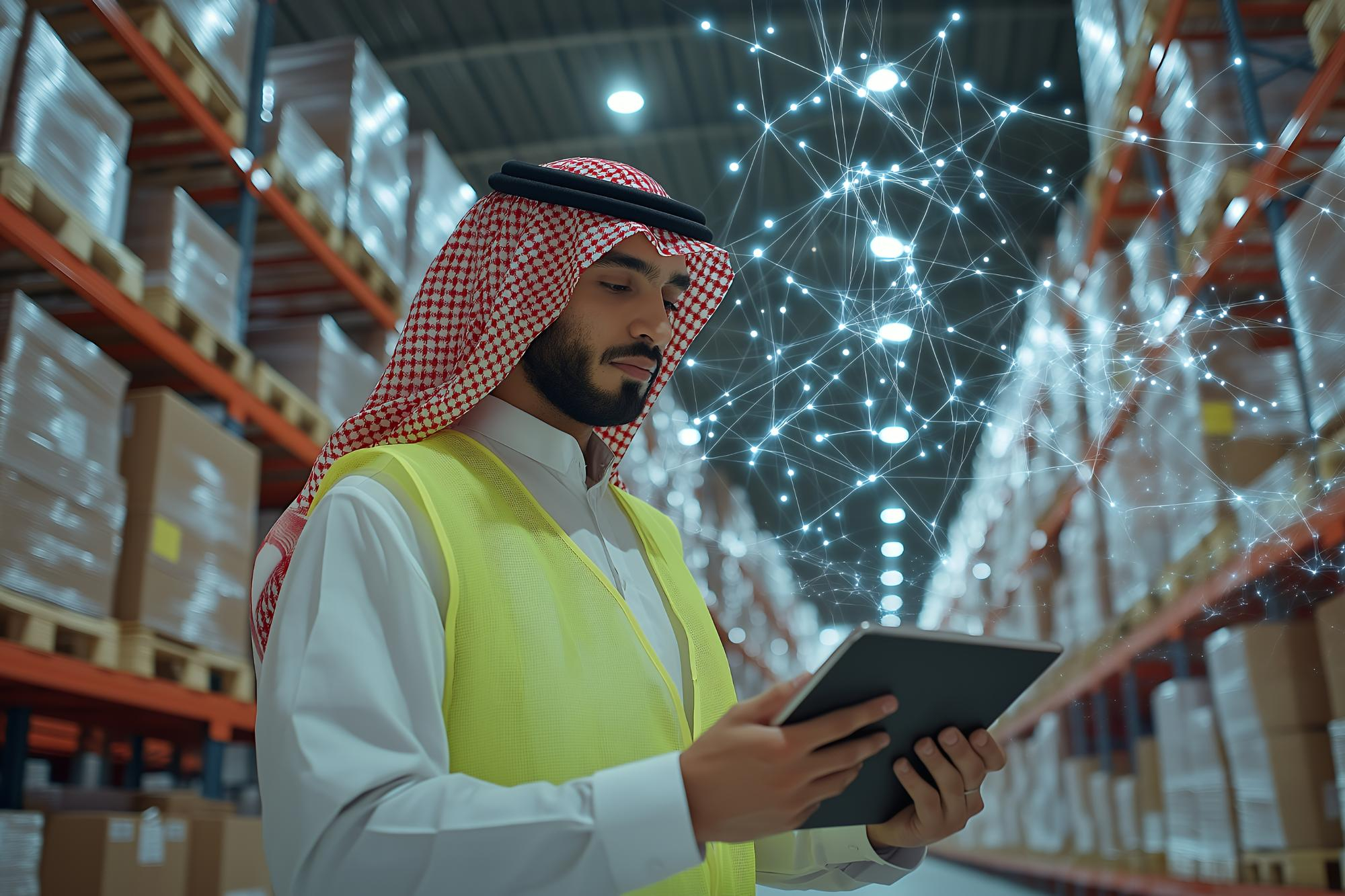
Smart Logistics and Supply Chain Optimization: How Dubai Businesses Are Leveraging Technology for Global Competitiveness?
The global supply chain landscape has undergone a dramatic transformation over the past decade, and Dubai stands at the forefront of this revolution. Smart logistics and supply chain optimization have become essential competitive advantages for businesses operating in the UAE’s dynamic trading environment. When we talk about supply chain optimization, we’re referring to the strategic use of advanced technologies to streamline operations, reduce costs, improve visibility, and enhance customer satisfaction. Dubai’s unique position as a global trading hub, combined with its investment in cutting-edge infrastructure and technology adoption, creates an unprecedented opportunity for businesses to leverage smart logistics solutions that drive growth and operational excellence.
The traditional approach to supply chain management relied heavily on manual processes, paper-based documentation, and reactive problem-solving. Businesses would discover inventory issues weeks after they occurred, shipments would be delayed due to lack of visibility, and coordination between suppliers, manufacturers, distributors, and retailers was often inefficient and error-prone. Today, the landscape is fundamentally different. Advanced technologies including the Internet of Things (IoT), artificial intelligence, blockchain, and automation are enabling businesses to create supply chains that are not just reactive but predictive, not just visible but transparent, and not just efficient but optimized in real-time.
For businesses based in Dubai or operating through Dubai’s ports and logistics infrastructure, the implications are profound. Dubai’s strategic location at the crossroads of major trade routes, combined with world-class ports, airports, and free zones, provides an ideal foundation for implementing smart logistics solutions. Companies that successfully implement these technologies gain the ability to serve global markets more efficiently, respond to customer demands faster, and maintain competitive pricing while improving margins. The competitive advantage is not temporary; it compounds over time as businesses develop expertise, refine their processes, and build ecosystems with suppliers and customers.
The statistics underscore the importance of this transformation. Companies that have implemented supply chain optimization technologies report average cost reductions of 15-25%, inventory carrying cost reductions of 20-30%, and order fulfillment time improvements of 30-50%. These aren’t marginal improvements; they’re transformational changes that directly impact profitability and market competitiveness. For a business operating on typical retail margins of 20-30%, a 20% reduction in supply chain costs can increase net profit by 50% or more. This is why forward-thinking businesses in Dubai and across the UAE are investing heavily in smart logistics solutions.
Understanding Smart Logistics and Supply Chain Optimization
Smart logistics and supply chain optimization represents a fundamental shift in how businesses manage the flow of goods, information, and finances from suppliers to customers. At its core, it’s about using technology to create visibility, enable real-time decision-making, and automate processes that were previously manual and time-consuming. The term “smart” in smart logistics refers to systems that can sense their environment, analyze data, make decisions, and take action with minimal human intervention.
The scope of supply chain optimization extends across the entire value chain. It begins with supplier relationship management and demand planning, continues through procurement and manufacturing, encompasses logistics and distribution, and extends to the final delivery and customer service. Each stage of this process generates data, and smart logistics systems capture, analyze, and leverage this data to optimize operations. A business might use demand forecasting algorithms to predict customer needs three months in advance, enabling better inventory planning. It might use IoT sensors to track products in real-time, enabling immediate response to any disruptions. It might use blockchain to create an immutable record of transactions, enabling verification of product authenticity and compliance with regulations.
Why does smart logistics matter so much for Dubai businesses? The answer lies in the nature of Dubai’s economy and its role in global trade. Dubai is not just a local market; it’s a gateway to Asia, Europe, and Africa. Businesses operating in Dubai serve customers across multiple continents, operate in multiple currencies, and must comply with diverse regulatory requirements. Traditional supply chain approaches struggle in this complex environment. Smart logistics solutions thrive in it. By implementing these technologies, Dubai businesses can manage complexity, reduce risk, and create competitive advantages that extend far beyond their local market.
Global trends in logistics technology are accelerating rapidly. Industry 4.0—the integration of digital technologies, IoT, and data analytics into manufacturing and supply chain operations—is no longer a future concept; it’s a present reality. Companies worldwide are implementing these technologies, and those that don’t risk falling behind. For businesses in Dubai, the good news is that the UAE’s progressive regulatory environment and investment in digital infrastructure make it easier to adopt these technologies than in many other markets. The bad news is that competition is increasing, and the window for gaining first-mover advantages is closing.
The benefits of supply chain optimization are multifaceted. Efficiency gains mean faster order fulfillment and reduced operational costs. Cost reduction means improved margins and better pricing for customers. Visibility means fewer surprises and better ability to respond to disruptions. Quality improvements mean fewer defects and better customer satisfaction. Sustainability improvements mean reduced environmental impact and better alignment with customer values. These benefits compound, creating businesses that are not just more profitable but more resilient and better positioned for long-term success.
Dubai’s Position as a Global Trading Hub
Understanding Dubai’s role in global trade is essential for appreciating the opportunities that smart logistics presents. Dubai’s strategic location at 25 degrees north latitude and 55 degrees east longitude places it at the intersection of major trade routes connecting Europe, Asia, Africa, and the Middle East. This geographic advantage has been leveraged through centuries of trade, but in the modern era, it’s been amplified through massive investments in infrastructure and technology.
Dubai’s ports are among the world’s busiest and most efficient. The Port of Dubai and Jebel Ali Port together handle over 15 million TEUs (twenty-foot equivalent units) of container traffic annually, making Dubai one of the world’s top container ports. The efficiency of these ports—measured by container handling speed, turnaround time, and operational reliability—is world-class. For businesses importing goods into the Middle East or exporting goods to global markets, Dubai’s ports offer advantages in speed, cost, and reliability that are difficult to match.
Beyond ports, Dubai’s infrastructure includes world-class airports, free zones, and logistics facilities. Dubai International Airport and Al Maktoum International Airport together handle over 180 million passengers and millions of tons of cargo annually. The free zones—including the Jebel Ali Free Zone, Dubai Airport Free Zone, and numerous specialized free zones—provide businesses with customs exemptions, 100% foreign ownership, and streamlined regulatory processes. This infrastructure creates an environment where businesses can establish regional distribution centers, consolidate shipments, and optimize their global supply chains with minimal friction.
The trade volume flowing through Dubai is staggering. The emirate serves as a transshipment hub for goods destined for markets throughout Asia, Africa, and the Middle East. A product manufactured in China might be shipped to Dubai, consolidated with other products, and then distributed to customers across the region. This transshipment function creates opportunities for businesses to leverage Dubai’s infrastructure for supply chain optimization. By establishing operations in Dubai, businesses can reduce shipping times, consolidate shipments to achieve better economies of scale, and maintain flexibility to respond to market demands across multiple regions.
For businesses operating through Dubai, the opportunities created by smart logistics and supply chain optimization are substantial. By implementing IoT tracking systems, businesses can provide customers with real-time visibility into shipments. By using AI-powered demand forecasting, businesses can optimize inventory levels across multiple distribution centers. By using blockchain, businesses can create transparent records of product movement, enabling verification of authenticity and compliance. By using warehouse automation, businesses can handle higher volumes with fewer staff and faster processing times. All of these capabilities are enabled by Dubai’s advanced infrastructure and supportive regulatory environment.
IoT and Real-Time Tracking Solutions
The Internet of Things (IoT) has revolutionized supply chain visibility. IoT devices—sensors, GPS trackers, RFID tags, and other connected devices—enable businesses to track products, containers, and vehicles in real-time as they move through the supply chain. This real-time visibility was impossible just a few years ago; today, it’s becoming the standard expectation for businesses implementing smart logistics solutions.
GPS tracking is perhaps the most familiar IoT application in logistics. Vehicles equipped with GPS trackers can be monitored in real-time, allowing businesses to track shipment location, speed, and route. If a vehicle deviates from its planned route, the system can alert dispatchers immediately. If a vehicle stops unexpectedly, the system can investigate. This level of visibility enables businesses to provide accurate delivery time estimates to customers, respond quickly to disruptions, and optimize routes to reduce fuel consumption and delivery times.
RFID (Radio-Frequency Identification) technology takes tracking a step further. Unlike GPS, which requires line-of-sight to satellites, RFID tags can be read through walls, packaging, and other materials. A warehouse can be equipped with RFID readers that automatically track when products enter or leave specific areas. This enables automatic inventory management without manual scanning. A business can know exactly what products are in which warehouse, in which aisle, in which bin, without any manual intervention. This level of accuracy dramatically reduces inventory errors and enables faster order fulfillment.
Sensors embedded in products or containers can provide even richer data. Temperature sensors can track whether refrigerated goods maintained the correct temperature throughout their journey. Humidity sensors can track whether sensitive products were exposed to excessive moisture. Pressure sensors can detect if containers were dropped or mishandled. Shock sensors can detect impacts that might indicate damage. This sensor data provides businesses with detailed information about product condition throughout the supply chain, enabling identification and resolution of quality issues.
Geofencing technology creates virtual boundaries around specific locations. When a vehicle equipped with a geofencing system enters or exits a geofenced area, the system can trigger alerts or actions. A business might use geofencing to alert customers when a delivery vehicle is approaching their location. It might use geofencing to verify that vehicles are visiting scheduled stops in the correct order. It might use geofencing to prevent vehicles from entering restricted areas.
The implementation of IoT-based real-time tracking solutions requires investment in hardware, software, and integration, but the benefits justify the investment. Businesses report that IoT tracking reduces shipping delays by 20-30%, improves inventory accuracy by 95%+, and enables faster resolution of customer inquiries about shipment status. For businesses serving customers who demand transparency and real-time information, IoT tracking has become a competitive necessity.
AI-Powered Demand Forecasting and Inventory Optimization
One of the most valuable applications of artificial intelligence in supply chain management is demand forecasting. Traditional demand forecasting relies on historical sales data, seasonal patterns, and manual adjustments by experienced planners. While this approach works reasonably well in stable environments, it struggles in dynamic environments where demand patterns change rapidly, new products are introduced, or external factors (like pandemic-related disruptions) create unprecedented situations.
AI-powered demand forecasting uses machine learning algorithms to analyze vast amounts of data and identify patterns that humans might miss. These algorithms can analyze historical sales data, seasonal trends, promotional calendars, competitor activity, economic indicators, social media sentiment, and dozens of other factors to generate demand forecasts that are significantly more accurate than traditional methods. For businesses implementing supply chain optimization, accurate demand forecasting is transformational.
The benefits of accurate demand forecasting are substantial. Businesses can optimize inventory levels, holding just enough stock to meet demand without excess inventory that ties up capital and risks obsolescence. Businesses can optimize production schedules, manufacturing products when they’re needed rather than building inventory speculatively. Businesses can optimize procurement, ordering materials from suppliers just-in-time rather than maintaining large safety stocks. These optimizations reduce costs, improve cash flow, and reduce waste.
Inventory optimization goes beyond just forecasting demand; it involves optimizing inventory levels across the entire supply chain. A business might have inventory in multiple warehouses, distribution centers, and retail locations. Traditional inventory management treats each location independently, leading to situations where one location has excess inventory while another has stockouts. AI-powered inventory optimization systems can balance inventory across all locations, automatically transferring stock from locations with excess inventory to locations with high demand. This reduces stockouts, reduces excess inventory, and improves overall supply chain efficiency.
The impact on business performance is significant. Businesses that implement AI-powered demand forecasting and inventory optimization report inventory carrying cost reductions of 20-30%, stockout reductions of 50%+, and improved cash flow. For a business with $10 million in annual inventory carrying costs, a 25% reduction translates to $2.5 million in annual savings. These savings can be reinvested in growth initiatives, passed on to customers to improve competitiveness, or retained to improve profitability.
Warehouse Automation and Robotics
Warehouse operations are labor-intensive, repetitive, and error-prone when performed manually. A warehouse worker might spend hours per day picking items from shelves, packing them into boxes, and preparing shipments for delivery. This work is physically demanding, monotonous, and prone to errors. Warehouse automation and robotics are transforming this landscape by automating repetitive tasks, improving accuracy, and enabling warehouses to operate 24/7 without human workers.
Effective supply chain management in Dubai’s competitive logistics environment demands seamlessly integrated digital platforms that combine fast-loading performance, mobile responsiveness, and intuitive user interfaces to deliver real-time shipment visibility and stakeholder communication across all touchpoints.
Automated Storage and Retrieval Systems (ASRS) use robotic arms and conveyor systems to automatically store and retrieve items from high-density storage racks. Rather than having workers walk through aisles to pick items, the ASRS brings items to a central picking station where a worker (or a robotic arm) picks items and places them in a bin. This dramatically reduces the distance workers must travel and the time required to fulfill orders. Warehouses using ASRS report order fulfillment time reductions of 50%+ and productivity improvements of 30-50%.
Robotic process automation (RPA) uses software robots to automate repetitive digital tasks. In a warehouse context, RPA might automate the process of receiving goods, updating inventory systems, generating pick lists, and creating shipping labels. These tasks, which traditionally required manual data entry and were prone to errors, can now be automated with near-perfect accuracy. This frees up warehouse staff to focus on higher-value activities like quality control, customer service, and process improvement.
Autonomous mobile robots (AMRs) are increasingly being deployed in warehouses to move goods from one location to another. These robots can navigate warehouse aisles, avoid obstacles, and deliver goods to picking stations or shipping areas. Unlike traditional conveyor systems, which are fixed in place, AMRs can be reconfigured as warehouse layouts change, making them more flexible and adaptable to changing business needs.
The implementation of warehouse automation requires significant capital investment, but the benefits justify the investment for many businesses. Warehouses using automation report 24/7 operational capability (compared to typical 16-hour operations for manual warehouses), accuracy improvements to 99.9%+ (compared to 95-98% for manual operations), and labor cost reductions of 30-50%. For businesses with high-volume operations or 24/7 customer demands, warehouse automation is increasingly essential.
Blockchain for Supply Chain Transparency
Blockchain technology, while often associated with cryptocurrency, has profound applications in supply chain management. At its core, blockchain is a distributed ledger that creates an immutable, transparent record of transactions. In a supply chain context, blockchain can create a transparent record of product movement from manufacturer to end consumer, enabling verification of authenticity, compliance with regulations, and ethical sourcing.
One of the most valuable applications of blockchain in supply chains is counterfeit prevention. Luxury goods, pharmaceuticals, and other high-value products are frequently counterfeited, costing businesses billions of dollars annually and potentially endangering consumers. Blockchain-based systems can create a permanent record of a product’s journey from manufacturer to consumer. Each transaction in the supply chain—manufacturing, shipment, receipt, sale—is recorded on the blockchain. Consumers can verify the authenticity of products by checking the blockchain record. This prevents counterfeiting and protects brand reputation.
Blockchain also enables transparency in ethical sourcing and compliance. For products like coffee, cocoa, diamonds, and seafood, consumers increasingly want to know that products were sourced ethically and in compliance with environmental and labor standards. Blockchain can create a transparent record of where products came from, how they were produced, and who handled them at each stage. This transparency enables businesses to verify compliance and communicate authenticity to consumers.
Regulatory compliance is another area where blockchain adds value. In regulated industries like pharmaceuticals and food, regulatory agencies require detailed documentation of product movement through the supply chain. Blockchain creates an immutable record that satisfies regulatory requirements while reducing the administrative burden of maintaining and verifying documentation.
The implementation of blockchain in supply chains is still in early stages, but the potential is enormous. Businesses implementing blockchain-based supply chain systems report improved transparency, reduced counterfeiting, faster regulatory compliance, and improved customer trust. As blockchain technology matures and becomes more standardized, adoption is expected to accelerate.
Integration of Multiple Technologies
The real power of smart logistics and supply chain optimization comes not from any single technology but from the integration of multiple technologies into a cohesive system. A business might use IoT tracking to monitor shipments, AI-powered demand forecasting to optimize inventory, warehouse automation to improve fulfillment speed, and blockchain to ensure transparency. When these systems are integrated, they create an intelligent supply chain that can sense its environment, analyze data, make decisions, and take action with minimal human intervention.
This integration creates what’s often called an “omnichannel supply chain”—a supply chain that seamlessly integrates multiple channels (online, retail, wholesale) and multiple fulfillment methods (warehouse, store, direct-to-consumer) into a unified system. A customer might order a product online, and the system automatically determines the optimal fulfillment location (warehouse, store, or third-party logistics provider), routes the shipment through the most efficient path, and provides real-time tracking information. The customer receives their order faster, the business reduces fulfillment costs, and everyone benefits.
System integration also enables real-time visibility and decision-making. Rather than waiting for end-of-day reports or end-of-week summaries, business leaders can access real-time dashboards showing supply chain performance, inventory levels, shipment status, and key metrics. If a disruption occurs—a supplier delay, a transportation issue, a demand spike—the system can alert relevant stakeholders immediately, enabling rapid response.
The data generated by integrated smart logistics systems provides valuable insights for continuous improvement. Businesses can analyze data to identify bottlenecks, optimize processes, and improve performance. Over time, these continuous improvements compound, creating supply chains that are increasingly efficient, responsive, and profitable. For businesses implementing supply chain optimization, this continuous improvement cycle is a key source of competitive advantage.
Challenges and Solutions in Implementation
While the benefits of smart logistics and supply chain optimization are substantial, implementation is not without challenges. Businesses considering these technologies need to understand the challenges and develop strategies to overcome them.
Technical challenges are significant. Integrating new technologies with existing legacy systems can be complex and time-consuming. A business might have inventory management systems, accounting systems, and customer relationship management systems that were built at different times using different technologies. Integrating these systems with new IoT platforms, AI analytics systems, and blockchain solutions requires careful planning and skilled technical expertise. Many businesses lack the internal technical expertise and must engage external consultants or technology partners, adding to implementation costs.
Change management is another critical challenge. Implementing new technologies often requires changes in how employees work. Warehouse workers might need to learn to work alongside robots. Planners might need to learn to trust AI-generated forecasts rather than relying on their own judgment. Managers might need to learn to interpret new dashboards and metrics. Resistance to change is natural, and businesses that don’t invest in training, communication, and change management often experience implementation failures.
Cost considerations are significant. Implementing IoT systems, AI analytics, warehouse automation, and blockchain solutions requires substantial capital investment. A business might need to invest millions of dirhams to implement comprehensive smart logistics solutions. While the long-term ROI is typically positive, the upfront investment is a barrier for many businesses, particularly smaller companies with limited capital.
Despite these challenges, businesses can successfully implement smart logistics solutions by taking a structured approach. Rather than trying to implement everything at once, businesses can implement solutions in phases, starting with the highest-impact, lowest-risk initiatives. A business might start by implementing IoT tracking for high-value shipments, then expand to warehouse automation, then add AI-powered demand forecasting. This phased approach spreads costs over time, allows the organization to learn and adapt, and reduces implementation risk.
Engaging experienced technology partners can help overcome technical challenges. Rather than building solutions from scratch, businesses can leverage existing platforms and solutions that have been proven in other implementations. This reduces technical risk and accelerates time-to-value.
Investing in training and change management is essential for successful implementation. Businesses should allocate resources for employee training, clear communication about why changes are being made and how they benefit the organization, and involvement of affected employees in the implementation process. When employees understand the benefits and feel involved in the process, they’re more likely to embrace new technologies.
Future Trends in Smart Logistics
The logistics and supply chain industry is evolving rapidly, and several trends are likely to shape the future of smart logistics and supply chain optimization.
Autonomous vehicles represent a major future trend. Self-driving trucks and delivery vehicles could revolutionize transportation, reducing labor costs, improving safety, and enabling 24/7 operations. While fully autonomous vehicles are still in development, semi-autonomous features like lane-keeping assist and adaptive cruise control are already improving safety and reducing driver fatigue. Over the next 5-10 years, expect to see increasing adoption of autonomous vehicles in logistics operations.
Drone delivery is another emerging trend. For certain types of products and delivery scenarios, drones can provide faster, more cost-effective delivery than traditional methods. While regulatory challenges and technical limitations currently restrict drone delivery to limited applications, the potential is enormous. As technology matures and regulations evolve, expect to see increasing use of drones for last-mile delivery, particularly in urban areas.
Predictive maintenance uses IoT sensors and AI analytics to predict when equipment will fail before failure occurs. Rather than waiting for a truck to break down or a warehouse conveyor to fail, businesses can predict failures and perform maintenance proactively. This reduces downtime, extends equipment life, and improves reliability.
Sustainability and green logistics are becoming increasingly important. Businesses are implementing electric vehicles, optimizing routes to reduce fuel consumption, and using renewable energy in warehouses and distribution centers. These initiatives reduce environmental impact, comply with increasingly stringent environmental regulations, and appeal to environmentally conscious customers. For businesses implementing supply chain optimization, sustainability improvements are often a co-benefit of efficiency improvements.
Conclusion
Smart logistics and supply chain optimization represent a fundamental transformation in how businesses manage their supply chains. By leveraging IoT tracking, AI-powered forecasting, warehouse automation, blockchain transparency, and integrated systems, businesses can create supply chains that are more efficient, responsive, and profitable than ever before. For businesses operating in Dubai or leveraging Dubai’s position as a global trading hub, the opportunities are particularly significant.
Dubai’s strategic location, world-class infrastructure, and progressive regulatory environment create an ideal environment for implementing smart logistics solutions. Businesses that successfully implement these technologies gain competitive advantages that extend far beyond cost reduction. They gain the ability to serve global markets more efficiently, respond to customer demands faster, and maintain competitive pricing while improving profitability.
The businesses that will thrive in the coming years are those that embrace smart logistics and leverage technology to optimize their supply chains. The good news is that implementing these solutions is increasingly accessible to businesses of all sizes. By taking a phased approach, engaging experienced partners, and investing in change management, any business can successfully implement smart logistics solutions.
The time to start exploring smart logistics solutions is now. Whether you’re just beginning to consider these technologies or you’re already implementing solutions, the opportunities are substantial. By taking action today, you’re positioning your business for success in the increasingly competitive global marketplace.
