

The Dawn of a New Professional Era
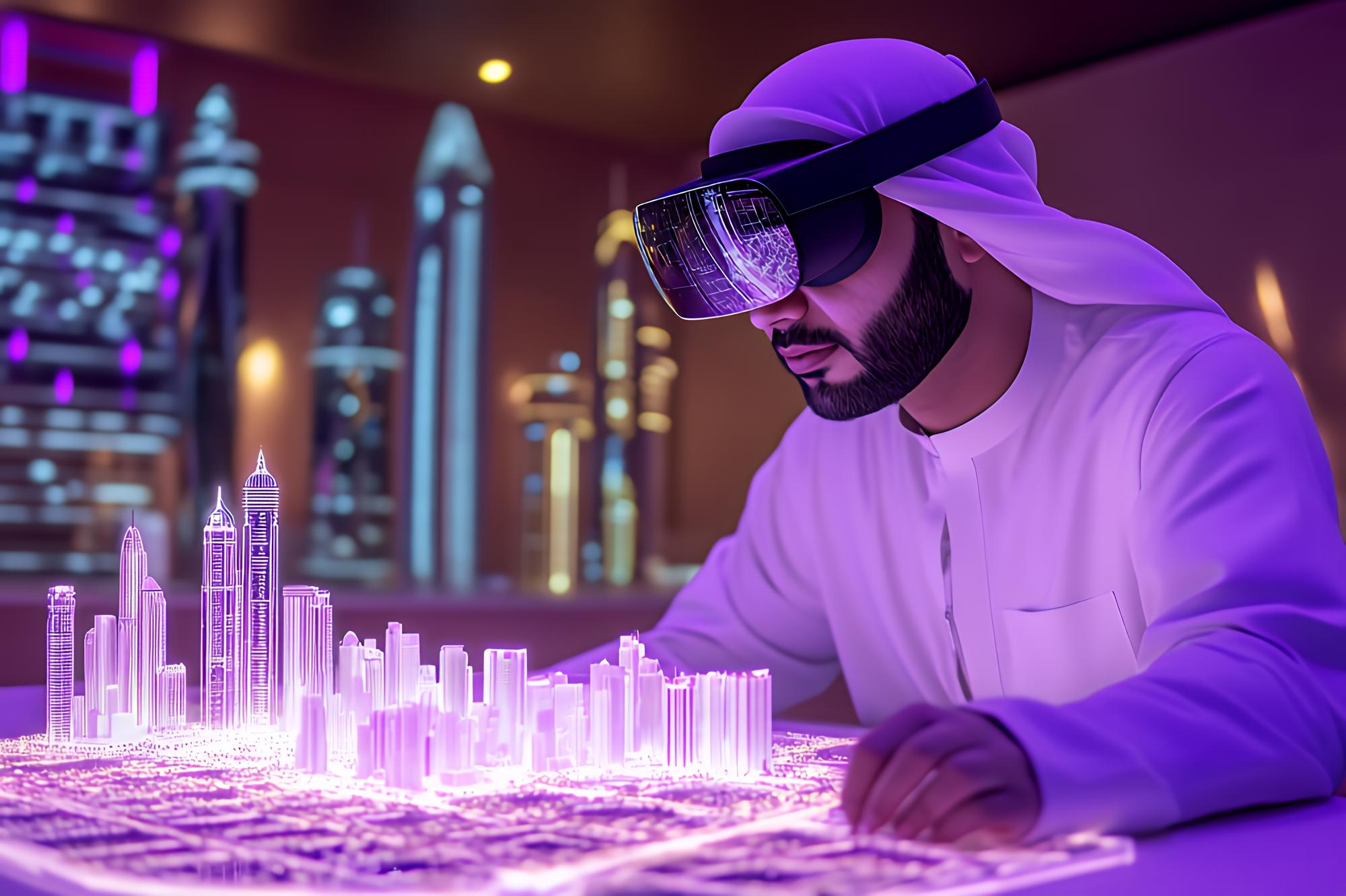
The United Arab Emirates has always been a nation with its eyes fixed firmly on the future. From its futuristic cityscapes to its ambitious space program, the UAE has consistently demonstrated a remarkable ability to embrace and drive innovation. Now, as the world stands on the cusp of a new technological revolution, the UAE is once again leading the charge, with a bold vision to become a global hub for Artificial Intelligence. This ambition is not just about developing cutting-edge technology; it’s about fundamentally reshaping the Future of Work.
For professionals in sectors like consulting, finance, law, and marketing, the rise of AI is not a distant threat but an immediate and exciting reality. We are moving beyond the era of AI as a mere tool for automation to a new paradigm where AI is a collaborative partner, augmenting human intelligence and unlocking unprecedented levels of productivity and creativity. The very fabric of professional services in the UAE is being rewoven, as AI-powered systems begin to handle tasks that were once the exclusive domain of human experts. This transformation is not just changing how we work; it’s changing the very nature of the work itself, creating new roles, new opportunities, and a new set of rules for success in the modern UAE economy.
The AI Revolution in Professional Services
The impact of Artificial Intelligence is being felt across every industry, but nowhere is the transformation more profound than in the professional services sector. These knowledge-based industries, which have traditionally relied on human expertise and billable hours, are being completely reimagined by the power of AI. Let’s explore how this revolution is unfolding across key professional services.
Consulting in the Age of AI
The world of consulting, long dominated by spreadsheets, presentations, and human intuition, is undergoing a seismic shift. AI is augmenting the work of consultants, enabling them to deliver deeper insights and more accurate predictions than ever before. AI algorithms can analyze vast datasets in a fraction of the time it would take a human team, uncovering hidden patterns and correlations that can inform strategic recommendations.
This is leading to the rise of AI-powered consulting platforms that can provide businesses with real-time insights and data-driven advice. The future of consulting with AI is not about replacing human consultants but about empowering them with superhuman analytical capabilities, allowing them to focus on what they do best: understanding the client’s business, building relationships, and providing strategic guidance.
The Transformation of the Financial Sector
The financial sector has always been at the forefront of technological adoption, and AI is no exception. From algorithmic trading and fraud detection to personalized financial advice, AI is transforming every aspect of the industry. In the UAE, a major financial hub, this transformation is particularly pronounced. AI-powered systems are being used to analyze market data, identify investment opportunities, and manage risk. The role of the financial advisor is also evolving. With AI handling much of the data analysis and portfolio management, advisors can focus on providing more holistic and personalized advice to their clients, helping them to achieve their long-term financial goals.
AI and the Legal Profession
The legal profession, often seen as traditional and slow to change, is also beginning to feel the impact of AI. AI in the legal profession UAE is streamlining many of the time-consuming and labor-intensive tasks that have long been the bane of lawyers. AI-powered tools can now analyze contracts, conduct legal research, and perform due diligence in a fraction of the time it would take a human lawyer. This is not only making legal services more efficient and affordable but is also freeing up lawyers to focus on more complex and strategic work, such as negotiating deals, advising clients, and appearing in court. We are also seeing the emergence of new legal tech startups in the UAE that are developing innovative AI-powered solutions for the legal industry.
The New Frontier of Marketing and Creative Services
In the world of marketing and advertising, creativity has always been king. But even in this creative domain, AI is making its mark. AI is enabling a new level of personalization in marketing, allowing businesses to deliver highly targeted and relevant messages to their customers. AI-powered tools can analyze customer data to understand their preferences and behavior, and then use this information to create personalized email campaigns, social media ads, and website experiences.
AI is also starting to play a role in the creative process itself. While AI may not be writing the next great novel anytime soon, it can be a powerful tool for brainstorming ideas, generating copy, and even creating visual content. Creative agencies that embrace these changes are poised for success. A forward-thinking agency like Effective, for example, can leverage AI to augment their creative process, delivering data-driven and highly effective campaigns for their clients, thereby shaping the future of Dubai careers in the creative field.
The Human-AI Collaboration: A New Paradigm of Work
The rise of AI in the workplace has understandably sparked a great deal of debate and anxiety about the future of jobs. The narrative of robots taking over human jobs is a common and powerful one. However, the reality of AI’s impact on the professional services sector is far more nuanced and, in many ways, more optimistic. We are not heading towards a future where humans are obsolete, but rather one where human and artificial intelligence work in synergy, creating a new paradigm of work that is more productive, creative, and fulfilling.
Moving Beyond the Fear of Job Replacement
The fear of AI and jobs being a zero-sum game is largely unfounded. While it is true that AI will automate certain tasks, particularly those that are repetitive and data-intensive, it is more likely to augment human roles than to replace them entirely. The focus is shifting from automation to augmentation. AI is becoming a powerful tool that can free up professionals from the drudgery of routine tasks, allowing them to focus on the uniquely human skills that AI cannot replicate: critical thinking, strategic planning, emotional intelligence, and building relationships.
Think of AI as a highly intelligent and efficient assistant. A lawyer can use AI to sift through thousands of legal documents in minutes, but it still takes a human lawyer to build a case, argue in court, and advise a client. A consultant can use AI to analyze market data, but it still takes a human consultant to understand the client’s unique challenges and develop a tailored strategy. This workforce transformation is not about replacing humans but about elevating them to a higher level of strategic and creative work.
The Skills of the Future
As AI takes over more of the routine and technical tasks, the skills that will be most valued in the future of work UAE are the ones that are uniquely human. The so-called “soft skills” are becoming the new hard skills. These include:
- Critical Thinking and Problem-Solving: The ability to analyze complex situations, think critically, and come up with creative solutions will be more important than ever. AI can provide the data, but it takes human intelligence to interpret it and make strategic decisions.
- Creativity and Innovation: As AI automates the mundane, the demand for human creativity and innovation will soar. The ability to think outside the box, generate new ideas, and approach problems from a fresh perspective will be a key differentiator.
- Emotional Intelligence: The ability to understand and manage your own emotions, and to recognize and influence the emotions of others, is a uniquely human skill that is essential for leadership, teamwork, and client relationships.
- Digital Literacy and a Mindset of Continuous Learning: While you may not need to be a coding expert, a basic understanding of AI and other digital technologies will be essential. More importantly, you will need to have a mindset of continuous learning and a willingness to adapt to new technologies and ways of working. The skills for the future of work in the Middle East will be defined by this adaptability and a commitment to lifelong learning.
Preparing for the Future of Work in the UAE
The transition to an AI-powered future of work is not something that will happen overnight, but it is happening now. To ensure a smooth and successful transition, a concerted effort is required from all stakeholders: the government, educational institutions, businesses, and individuals. Preparing for the future of work in Dubai and the wider UAE is a shared responsibility, and a proactive approach is essential to harness the full potential of AI while mitigating its potential risks.
The Role of Government and Education
The UAE government is already playing a leading role in preparing the nation for the future of work. The National Strategy for Artificial Intelligence 2031 is a clear testament to this commitment. The government is investing heavily in AI research and development, promoting AI education at all levels, and creating a regulatory framework that encourages innovation while ensuring ethical and responsible use of AI. Educational institutions also have a critical role to play in revamping their curricula to equip students with the skills they will need to thrive in the AI-powered economy. This means a greater emphasis on STEM education, as well as the development of soft skills like critical thinking, creativity, and collaboration.
What Businesses Can Do to Prepare?
Businesses cannot afford to be passive observers in this transformation. They need to be proactive in preparing their workforce for the future of work. This includes:
- Investing in Employee Training and Development: Businesses should invest in upskilling and reskilling their employees to ensure they have the skills they need to work alongside AI. This could involve providing training on new AI tools, as well as programs to develop soft skills.
- Fostering a Culture of Innovation and Adaptability: To thrive in the AI era, businesses need to foster a culture that embraces change, encourages experimentation, and values continuous learning. This means creating a safe environment for employees to try new things, learn from their mistakes, and adapt to new ways of working.
What Individuals Can Do to Future-Proof Their Careers?
Ultimately, the responsibility for future-proofing one’s career lies with the individual. In the rapidly changing world of work, a mindset of lifelong learning is no longer a choice; it’s a necessity. Individuals should:
- Proactively Seek Out Opportunities for Learning and Development: Don’t wait for your employer to provide you with training. Take the initiative to learn new skills, whether it’s through online courses, workshops, or professional certifications.
- Build a Personal Brand and a Strong Professional Network: In the future of work, your personal brand and your professional network will be your most valuable assets. Invest in building a strong online presence, and actively network with other professionals in your field. This will not only help you to stay informed about the latest trends but also to uncover new career opportunities in the evolving Dubai careers landscape.
Embracing the AI-Powered Future of Work
The future of work is not a dystopian vision of robots taking over the world. It is a future of collaboration, where human and artificial intelligence work together to solve complex problems, drive innovation, and create a more prosperous and fulfilling world. The transformative impact of AI on professional services in the UAE is already undeniable, and the pace of change will only continue to accelerate. This is not a time for fear or resistance, but for excitement and anticipation.
The Future of Work UAE holds immense promise. By embracing AI as a partner, we can augment our own intelligence, automate the mundane, and free ourselves to focus on the work that truly matters. The opportunities for professionals and businesses to thrive in this new era are boundless. By investing in new skills, fostering a culture of adaptability, and embracing a mindset of lifelong learning, we can not only navigate the challenges of this transformation but also shape a future of work that is more human, more creative, and more rewarding for all.
